Nagorno-Karabakh war (2020–2023+)
Nagorno-Karabakh war (2020–2023+) is one continuing use of force and corridor control by Azerbaijan against remaining Armenian-controlled Nagorno-Karabakh and the Lachin link, running from the 27 September 2020 offensive through the 10 November 2020 trilateral statement, the 12 December 2022 Lachin closure, the 19–20 September 2023 operation, the emptying of the Armenian population, and the International Court of Justice orders of 22 February 2023 and 17 November 2023.
Read the full background
What this driver is
Nagorno-Karabakh war (2020–2023+) is one continuing use of force and corridor control by Azerbaijan against remaining Armenian-controlled Nagorno-Karabakh and the Lachin link, running from the 27 September 2020 offensive through the 10 November 2020 trilateral statement, the 12 December 2022 Lachin closure, the 19–20 September 2023 operation, the emptying of the Armenian population, and the International Court of Justice orders of 22 February 2023 and 17 November 2023. It is a mechanism, not a headline and not a 1918–45 territorial-revisionism row. It is not the Ukraine war.
The driver is not “restoration of territorial integrity” as a mood, not a civil war Russia later joined, and not an energy-price spike. They do not replace it. A pipeline MoU is an energy file. A media trial is a civic file. This node is the Karabakh war: organised violence, corridor closure, and mass departure.
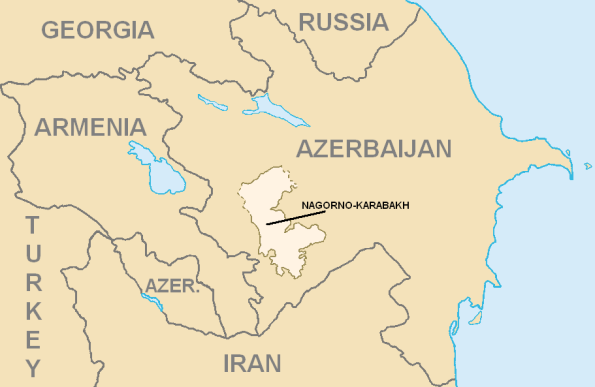
It applies to Nagorno-Karabakh / Artsakh and the Lachin corridor from 2020 to the ICJ’s post-September 2023 orders. It is not the 1990s first Karabakh war as a second driver, and it is not Kosovo, Crimea, or Taiwan. Those remain separate uses of force.
The legal core is the 10 November 2020 trilateral statement signed by I.H. Aliyev, N.V. Pashinyan, and V.V. Putin, and the ICJ orders requiring unimpeded Lachin movement (22 February 2023) and safe return or safe departure plus protection of identity and property records (17 November 2023). A presidential adjective that calls the 2023 operation “anti-terror” does not change the mechanism.
Mechanism
The war moves welfare through named channels.
First, organised killing in 2020. Forty-four days of artillery, drones, and urban fighting raised battle-related and civilian deaths. This page does not invent a unique 2020 death total. UCDP, ICRC, or a named UN product would be required for an integer.
Second, corridor closure. From 12 December 2022 the Lachin corridor was blocked. Armenia’s 28 December 2022 ICJ request recites that date. Medicine, food, and fuel shortages followed. The 22 February 2023 ICJ order required unimpeded movement of persons, vehicles, and cargo in both directions.
Third, the 19–20 September 2023 operation, mass departure, and dissolution. Azerbaijani forces attacked remaining Armenian-controlled Nagorno-Karabakh. Ethnic Armenians left. UNHCR, ICRC, and the Armenian migration service recorded the flight. Numbers are contested — commonly “more than 100,000”; Baku disputes “ethnic cleansing.” This driver does not settle that legal label in a Factrail coefficient. On 28 September 2023 Samvel Shahramanyan signed a decree dissolving Artsakh institutions with effect from 1 January 2024 (Armenpress; BBC). He is unresolved here.
Fourth, the ICJ’s 17 November 2023 order: safe return of those who left after 19 September 2023; safe departure of those who remained; protect identity and property records; report in eight weeks. That is a court product, not an NGO take.
Fifth, command. Under the Azerbaijani constitution the president is commander-in-chief. Sharing sensors or doctrine with a neighbour does not move authorship off the order. Pashinyan’s signature on 10 November 2020 is a neighbouring contribution on a later Person page, not a reason to mint him here.
Timing is days for an offensive and months for corridor starvation and flight. A later peace treaty with a date would be a new fact. It would not split this driver in two or hang it on Ukraine.
Evidence base
The best evidence is official instruments plus independently recorded flight.
president.az records the 10 November 2020 trilateral statement. The ICJ records the 22 February 2023 and 17 November 2023 orders (https://www.icj-cij.org/ (opens in a new tab)). UNHCR and ICRC recorded the September–October 2023 departures. Reuters and AP recorded the 27 September 2020 opening and the 19 September 2023 operation the same days. Armenpress and BBC recorded the 28 September 2023 dissolution decree (https://www.bbc.com/news/world-europe-66945481 (opens in a new tab)). ODIHR’s 27 February 2025 final report on the 7 February 2024 snap election is a neighbouring electoral file, not this war.
This page does not invent a unique 2020 combatant death total or a unique 2023 civilian death total.
Evidence is strongest for a signed trilateral text, an ICJ order, and contemporaneous independent reporting of the offensive and the flight. It is weaker for any unique first-hour death coefficient. It is weakest where a television adjective is asked to replace an instrument.
Effect on welfare indicators
This driver, when it actually runs, is a first-order channel into displacement and organised-violence series.
- People internally displaced by conflict and violence (IDMC): direction higher displacement when a corridor is closed and a remaining population flees. Horizon: days to months. Confidence: high for the 2023 flight as a completed departure; medium for the 2020 war’s smaller displacement waves. The live IDMC stock is global, not a Karabakh-only census.
- Global deaths from organized violence (UCDP): direction higher deaths when the 2020 war intensifies. Horizon: same year for battle deaths.
Missing coefficients stay missing.
The welfare sign of the driver on those indicators is negative: strengthening the war increases a lower-is-better displacement stock and a lower-is-better death count. That is the opposite of treating a 2023 offensive as a mild territorial-integrity hero.
Interactions and contested points
The war interacts with energy diversification (the 18 July 2022 EU MoU), media capture, and snap elections including polling in emptied Khankendi/Stepanakert. Reinforcement is obvious when an offensive and a corridor closure hit the same population. Offsetting is the claim, common in commissioned-positive coverage, that BTC, TAP, or COP29 rebates 2023. Those are different mechanisms on different dates. They can be stored. They do not cancel 19 September 2023.
The strongest competing view is that 2020 and 2023 were lawful restoration of territorial integrity under UNSC 1990s resolutions. Those resolutions are not a 2023 licence on this node. The competing defence of this driver is the record: a 2020 war, a trilateral freeze, a Lachin closure that went to the ICJ, a 2023 operation, and a mass departure the Court then addressed.
A second competing view is that this is the same mechanism as Ukraine or as 1918–45 territorial-revisionism. It is not. Crimea–Donbas–2022+ is a different war on a different driver. Brest-Litovsk / Molotov-Ribbentrop / Yalta is a different century.
Established: one Karabakh force bundle from 2020 through the 2023 flight, the 28 September 2023 dissolution decree, and ICJ orders; trilateral text; contemporaneous reporting. A later peace-track instrument with a date would be a neighbouring fact. It would not hang this driver on Ukraine or mint a second Karabakh war.
What it changes
Indicators this driver moves, strongest relation first. Relation strength is separate from the observed state.
Strengthens · 80% impact strength
Observed
69M people (stock, end-of-year) · 28M above the normal line (2025)
Worse than normal3 readings, 2023–2025: rose from 68M people (stock, end-of-year) to 69M people (stock, end-of-year).
Above normal = worse · Lag ~7 d · Relation verified
Strengthens · 70% impact strength
Observed
245k deaths per year · 195k above the normal line (2025)
Worse than normalAbove normal = worse · Relation verified
Key facts moving this driver
Ranked by impact weight, then verification, then recency.
- ICJ orders safe return or safe departure and protection of records after 19 September 202317 November 2023 · Strengthening · impact weight 1
- Ethnic Armenians leave Nagorno-Karabakh after the 19 September operation24 September 2023 · Strengthening · impact weight 1
- Azerbaijani forces attack remaining Armenian-controlled Nagorno-Karabakh19 September 2023 · Strengthening · impact weight 1
- ICJ orders unimpeded movement along the Lachin corridor22 February 2023 · Strengthening · impact weight 1
- Pashinyan, Aliyev and Trump sign the Washington declaration on a peace process and TRIPP8 August 2025 · Weakening · impact weight 1
- Azerbaijan launched a military offensive in Nagorno-Karabakh19 September 2023 · Weakening · provisional weight
- Most of Nagorno-Karabakh's ethnic Armenian population fled to Armenia1 September 2023 · Weakening · provisional weight
- Armenia and Azerbaijan reported major border clashes13 September 2022 · Weakening · provisional weight
Accountability & contradictions
A view of the graph: opposing facts, the actors behind them, and what is disputed.
What strengthened it
What weakened it
Who drove the change
Driver over time
The dated facts recorded on this driver, oldest first.
27 September 2020 · Strengthening
Azerbaijan opens the 44-day Karabakh war10 November 2020 · Strengthening
Aliyev, Pashinyan and Putin sign the 10 November 2020 trilateral statement12 December 2022 · Strengthening
The Lachin corridor is blocked22 February 2023 · Strengthening
ICJ orders unimpeded movement along the Lachin corridor19 September 2023 · Strengthening
Azerbaijani forces attack remaining Armenian-controlled Nagorno-Karabakh24 September 2023 · Strengthening
Ethnic Armenians leave Nagorno-Karabakh after the 19 September operation17 November 2023 · Strengthening
ICJ orders safe return or safe departure and protection of records after 19 September 202319 April 2024 · Strengthening
Armenia and Azerbaijan agreed on an initial section of border delimitation13 March 2025 · Strengthening
Armenia and Azerbaijan announced agreement on the text of a peace treaty8 August 2025 · Weakening
Pashinyan, Aliyev and Trump sign the Washington declaration on a peace process and TRIPP
Causal path
Facts move the driver; the driver moves indicators. Open the full network to inspect each link.
- Facts16 recorded
- moveDriverNagorno-Karabakh war (2020–2023+)
- strengthensIndicators (2)People Internally Displaced by Conflict and Violence (IDMC)
Evidence
Review status of the facts behind this driver.
Documented Sep 2020 – Aug 2025
How Factrail grades evidenceBy the Factrail desk · Method: how we source and score · Last reviewed · Sources: 8
Questions
Who is responsible for Nagorno-Karabakh war (2020–2023+)?
Factrail's graph links Ilham Aliyev and Nikol Pashinyan to Nagorno-Karabakh war (2020–2023+) through sourced facts.
When did Nagorno-Karabakh war (2020–2023+) start?
27 September 2020: Azerbaijan opens the 44-day Karabakh war.
How does Nagorno-Karabakh war (2020–2023+) affect people?
It is linked to People Internally Displaced by Conflict and Violence (IDMC) and Global deaths from organized violence (UCDP) in Factrail's graph.