Istanbul Ukraine Talks Put Europe's Security Role on Trial
Published Factrail
Summary
For European taxpayers, the stakes extend beyond whether the leaders produce a joint statement. European governments are already financing military assistance, refugee services, defence programmes and energy resilience.
Report
A new meeting, not a peace agreement
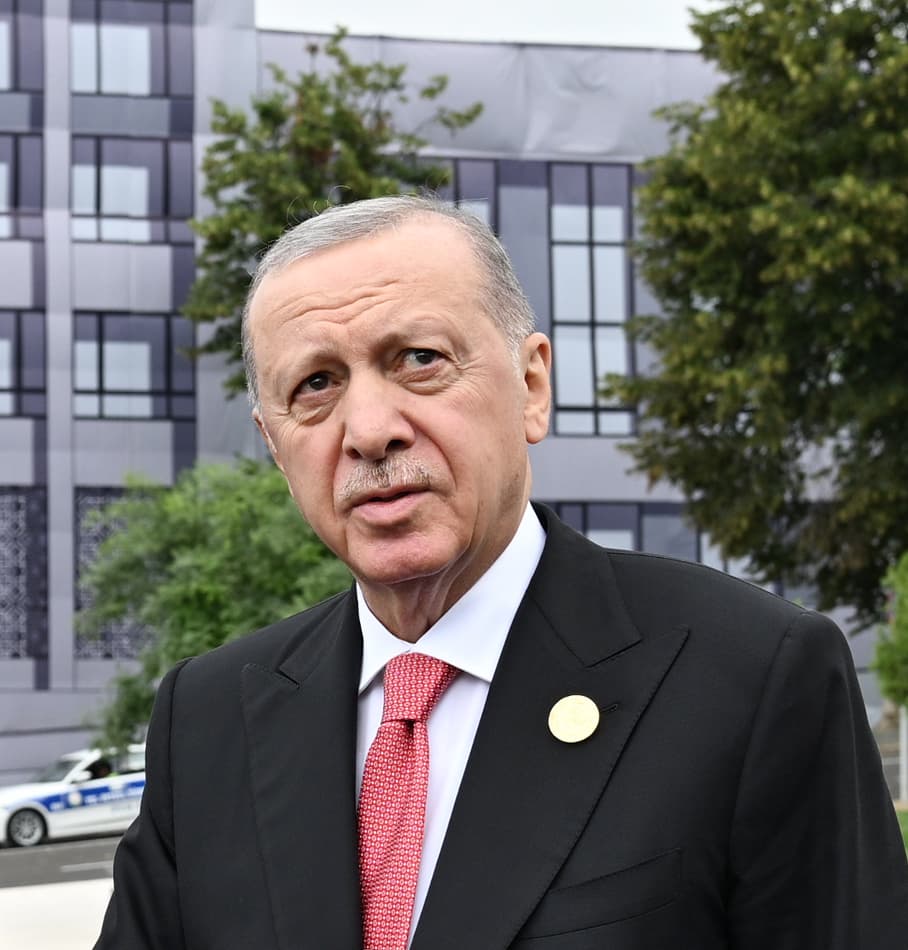
Ukrainian President Volodymyr Zelenskyy said on October 30 that he would travel to Turkey for important negotiations, with a meeting planned in Istanbul on October 31 with Turkish President Recep Tayyip Erdoğan. Ankara's communications office described bilateral cooperation, the war in Ukraine and security in the Black Sea as subjects of discussion. The announcement came as Kyiv sought to revive broader negotiations involving Russia and the United States, potentially in Abu Dhabi in November. The immediate fact is a planned diplomatic meeting. It is not a ceasefire, a security guarantee or evidence that Russia has agreed to Ukrainian conditions.
For European taxpayers, the stakes extend beyond whether the leaders produce a joint statement. European governments are already financing military assistance, refugee services, defence programmes and energy resilience. A future settlement that leaves unresolved threats could require continued public expenditure for years. A credible settlement could lower some security risks, but only if its terms are enforceable and Russia observes them. The distinction between diplomatic access and actual security outcomes is fundamental. Optimistic statements should not be treated as money saved before the danger has changed.
Why Istanbul matters
Turkey occupies an unusual position in the regional security system. It is a NATO member, controls access between the Mediterranean and the Black Sea under treaty arrangements and maintains relations with both Kyiv and Moscow. It has previously helped facilitate negotiations and the grain-export arrangement that opened a route for agricultural shipments during part of the war. This gives Ankara an incentive to mediate while pursuing its own trade and security interests. The Turkish government can offer a forum; it cannot impose mutually accepted peace terms on two governments that have not resolved core disagreements.
The October 30 announcement specifically raised Black Sea security. Attacks involving ports, vessels and infrastructure can threaten civilian commerce as well as military logistics. The impact of maritime disruption travels beyond Ukraine through grain prices, freight insurance, ship availability and energy routes. But markets are influenced by global harvests, fuel prices and alternative shipping capacity too. Readers should not attribute every increase in food costs to a particular Russian attack or every improvement to a diplomatic meeting. The appropriate test is observed shipping access and actual commercial volumes.
Ukrinform and Anadolu reported that the Turkish invitation and presidential meeting were confirmed. Kyiv Independent described the Black Sea agenda and Turkey's earlier efforts to facilitate dialogue. Reuters separately reported Zelenskyy's statements about November negotiations. These sources establish the plan and the participants. They do not establish that the October 31 meeting has already occurred, what it will decide or whether Moscow will accept any proposal emerging from it.
The European seat at the table
The Financial Times reported on October 30 that European governments were divided over how to be represented in potential US-mediated discussions. Britain, France and Germany were being considered as a possible European group, but smaller countries were concerned that decisions affecting their security could be negotiated without them. This disagreement is more than a question of protocol. Any agreement affecting sanctions, future military assistance, NATO posture or frozen Russian assets may involve institutions and budgets beyond the three largest European powers.
Representation and veto rights must therefore be separated. A minister can attend a meeting without authority to commit the EU budget. Germany, France and Britain may coordinate positions while remaining subject to different domestic processes. The EU institutions hold particular responsibilities under the bloc's treaties, while NATO members decide alliance security matters under their own arrangements. None of these powers can be replaced by a diplomatic photograph. An agreement that requires European spending must identify the institutions that can authorize it and the national parliaments that will bear responsibility.
The NATO organization (opens in a new tab) is central because a lasting settlement will affect the military balance in Europe. Yet NATO is not a single treasury that can automatically pay every future security bill. Member governments finance their own forces, procure equipment and vote budgets. A claim that a settlement will reduce costs needs to specify which procurement programmes, force commitments or aid packages could actually change. Without that accounting, talk of a peace dividend is only a projection.
Russia's position remains a barrier
On October 30, Russian Foreign Minister Sergei Lavrov said Moscow's fundamental position had not changed. Reuters reported that he criticized Ukraine's continued access to weapons and its strikes on Russian targets. Kyiv has consistently insisted on sovereignty and security guarantees, while Moscow has demanded restrictions that Ukraine rejects. The existence of talks does not mean these positions have converged. A negotiated text would require difficult choices about territory, the future of Ukrainian forces, sanctions and mechanisms for detecting and responding to violations.
Diplomatic channels can be useful even when major disagreements remain. They can exchange proposals, clarify limits, support humanitarian arrangements and reduce accidental escalation. But a process has to be judged by outcomes. The most dangerous scenario for European security may be a formally announced cessation of hostilities that creates time for renewed aggression without credible enforcement. That is not a prediction that talks will fail. It is the reason governments should evaluate monitoring arrangements, guarantees and implementation before reducing readiness.
Who benefits from talks
Civilians in Ukraine stand to benefit most if negotiations lead to a durable reduction in attacks. Commercial shipping operators and farmers could gain from safer Black Sea routes. Turkey may benefit diplomatically from hosting talks and economically from regional stability. European governments could reduce some extraordinary costs if a credible agreement lowers risks. These gains are conditional and cannot be booked as achieved on October 30. A scheduled meeting changes the diplomatic timetable, not yet the battlefield or the shipping insurance market.
Russia could benefit from sanctions relief if that becomes part of an agreement, but there is no established deal granting such relief through the Istanbul meeting. Any such move would have distributional consequences for European governments, energy companies and Ukraine. Western taxpayers could also face higher future costs if concessions produce a weak settlement that must later be enforced by expanded military deployments. The relevant issue is not whether talking to Russia is intrinsically good or bad; it is whether the eventual terms improve security rather than postpone danger.
Who pays if diplomacy stalls
European taxpayers are already exposed to military assistance, industrial investments and domestic preparedness. If talks make no progress, these expenditures may continue, although their amounts will be set through specific national and EU decisions. Firms dependent on Black Sea routes may retain higher insurance and logistics costs. Ukrainian communities face the most direct human cost through attacks, displacement and damaged infrastructure. There is no moral or economic equivalence between an extra public procurement bill in Western Europe and deaths or destroyed homes in Ukraine. The burdens need to be identified distinctly.
The Ukraine war driver (opens in a new tab) captures the ongoing security mechanism. Russia's invasion and continued attacks sustain demand for defence and humanitarian measures. Those costs cannot be reduced to a single headline budget total because they occur across multiple governments and years. The energy security driver (opens in a new tab) captures another channel: disruption and uncertainty can motivate investment in diversified energy supply, which brings near-term capital expense and potential longer-run resilience. Both should be monitored with dated decisions and actual spending.
Black Sea economics without shortcuts
The Black Sea is important for Ukrainian food exports, coastal security and regional maritime commerce. More reliable navigation can reduce delays and insurance premiums, while fewer attacks on ports can protect export capacity. Yet a stable diplomatic channel is not the same as secure navigation. Insurers and shipowners respond to observed threats, route restrictions and port operations. A serious economic assessment should track vessel movements, insurance costs, freight prices and grain-export volumes after the meeting. Only then can readers test whether the diplomatic process moved market conditions.
Western energy markets also respond to threats in other regions, including the Gulf. As a result, a movement in oil or gas prices following Istanbul cannot automatically be assigned to the talks. A causal claim needs to compare simultaneous events and distinguish expectations from realized supply. The energy price volatility driver (opens in a new tab) provides a way to follow the broader market effect without pretending that one summit controls global energy prices.
What it moves
The first indicator is commercial Black Sea shipping risk. It could decrease if enforceable arrangements reduce attacks, but no such decline can be recorded from the announcement alone. The second is Ukraine's civilian infrastructure damage, which could fall if hostilities actually ease. The third is European military and assistance expenditure, potentially lower over time under a durable settlement but not immediately reduced by talks. The fourth is freight and food price volatility, where safer routes could reduce uncertainty. The fifth is NATO readiness and deterrence capability, which might remain a priority even after a ceasefire because the credibility of any agreement must be evaluated.
A public dashboard should distinguish diplomatic meetings held, written proposals exchanged, ceasefire monitoring provisions, verified attack totals and actual financial obligations. It should also state which countries have consented to any commitments. A proposal that binds European taxpayers without their governments' approval would face a legitimacy and implementation problem, regardless of who negotiated it.
The strongest case for the initiative
Turkey has genuine reasons to facilitate talks and channels between adversaries can limit harm even before a final agreement is reached. European concern about being excluded is also justified when consequences may fall on European security budgets. These positions are compatible: more communication can be valuable while democratic scrutiny remains necessary. The test for Istanbul is not a triumphant declaration. It is whether negotiations produce verifiable steps that protect civilians and preserve legitimate security interests.
What happens next
The immediate marker is the planned October 31 Istanbul meeting and any official readout from Ankara and Kyiv. The next is whether the proposed November 6–10 Abu Dhabi window produces an actual negotiating session and whether European representatives have a defined role. Monitor any commitments on Black Sea security, sanctions, military guarantees or humanitarian access. The cost to Western taxpayers will be determined by those concrete instruments, not by the number of diplomatic invitations issued.
Sources
- Reuters — Zelenskiy says he will head to Turkey for talks, October 30 (opens in a new tab)
- Ukrinform — Zelensky to visit Türkiye on October 31, October 30 (opens in a new tab)
- Kyiv Independent — Zelensky to discuss Black Sea security in Istanbul, October 30 (opens in a new tab)
- Anadolu Agency — Ukrainian president due in Türkiye for Erdoğan talks, October 30 (opens in a new tab)
- Financial Times — Europe divided over role in US-Russia talks, October 30 (opens in a new tab)
- Reuters — Lavrov says Russian position remains unchanged, October 30 (opens in a new tab)