Who Attacked Heidi Levine in the West Bank?
TL;DR
Reports on 16 October 2026 described masked Israeli settlers attacking Palestinian olive harvesters and photographer Heidi Levine near Ramallah. Israeli police said they opened an investigation, while the US State Department used language condemning violence by any party without identifying a culprit in its statement.
By the Factrail desk · Method: how we source and score · Last reviewed
Key graph impact
The article explains graph entities; the causal edges belong to the facts and drivers it links to.
- ArticleWho Attacked Heidi Levine in the West Bank?
- explainsDriverIsrael–Gaza war (Oct 2023+)
- strengthensIndicators (6)Global deaths from organized violence (UCDP)
- ArticleWho Attacked Heidi Levine in the West Bank?
- explainsDriverRule of Law
- weakensIndicators (4)Rule of Law Gap from the Highest Governance Score
- ArticleWho Attacked Heidi Levine in the West Bank?
- explainsDriverMedia Freedom
- strengthensIndicators (2)Alternative sources of information index
Strengthens · 85% impact strength
Observed
245k deaths per year · 195k above the normal line (2025)
Worse than normalAbove normal = worse
Strengthens · 85% impact strength
Observed
69M people (stock, end-of-year) · 28M above the normal line (2025)
Worse than normal3 readings, 2023–2025: rose from 68M people (stock, end-of-year) to 69M people (stock, end-of-year).
Above normal = worse · Lag ~7 d
Weakens · 74% impact strength
Observed
43.9 Score · 43.9 above the normal line (2024)
Worse than normal26 readings, 1996–2024: rose from 43 Score to 43.9 Score.
Normal is zero · any amount = worse
- Better
Strengthens · 68% impact strength
Observed
0.62 score from 0 to 1 · 0.25 below the normal line (2024)
Worse than normal125 readings, 1900–2024: rose from 0.37 score from 0 to 1 to 0.62 score from 0 to 1.
Above normal = better
Article
Masked Settlers Beat a Washington Post Photographer. Washington Blamed 'Any Party'
Masked Israeli settlers attacked American photojournalist Heidi Levine while she reported on the Palestinian olive harvest near Abu Falah in the occupied West Bank on 16 October 2026. Levine said she was kicked repeatedly and required medical attention. ABC News (opens in a new tab) reported witness videos, the Washington Post's condemnation and an Israeli police investigation. A US State Department response condemned criminal violence “by any party” without directly identifying the settlers accused in the attack. That gap between evidence and diplomatic language is the accountability issue at the centre of this report.
An attack on the harvest and on a reporter
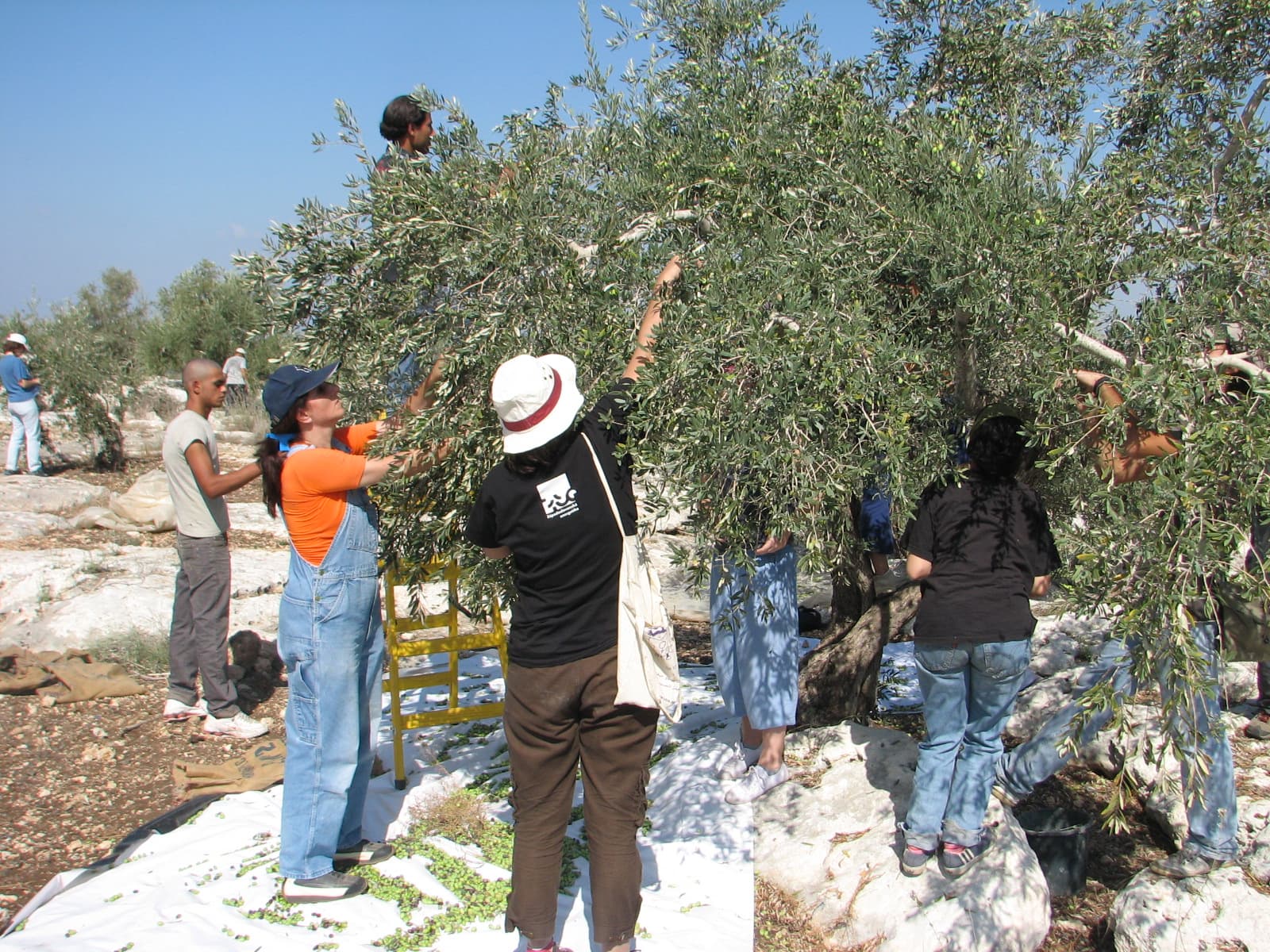
Levine was covering farmers harvesting olives around Abu Falah, near Ramallah. Witnesses described a group of masked men charging from a hillside. The Washington Post said its photographer wore visible press markings. Videos described by ABC showed attackers beating a journalist on the ground; other witnesses helped her escape. Levine's own account, witnesses' footage and statements from her employer are strong, mutually reinforcing evidence of the incident, while identification and prosecution of individual attackers remain tasks for investigators.
The Guardian (opens in a new tab) reported attacks across multiple West Bank villages during the same harvest period, including injuries to Palestinians and burning of property. Its account cites at least 20 injuries in the broader reported attacks; other agencies supplied different counts at different times. Those totals are not the number of people injured in the discrete assault on Levine. The larger context matters because an assault that prevents farmers and observers from reaching fields has both an economic effect and a chilling effect on testimony about violence.
The human cost extends beyond the camera
The olive harvest provides income and food for Palestinian families whose access to work and farmland has already been restricted. The Guardian described additional limits on entering agricultural land in Area C, as well as destruction or theft of trees and crops. When residents fear being attacked while collecting their harvest, the effect can be lost wages, damaged property and reduced ability to remain on their land. These are tangible consequences, not abstract elements of an ideological dispute. See the broader West Bank administration and settlement expansion (opens in a new tab) and humanitarian access (opens in a new tab) for those connected pressures.
For Levine and fellow journalists, physical attacks carry a second cost. If protective gear, press identification and visible cameras do not deter assaults, fewer witnesses may be able to document future incidents. The Foreign Press Association described the case as part of a recurring pattern and demanded action. That association's statement is an advocacy assessment by journalists, not an arrest record; it is nevertheless relevant to the consequences for media freedom (opens in a new tab). The Post's request for an investigation can be evaluated against subsequent police disclosures and charges.
Responses from Israel and the United States
Prime Minister Benjamin Netanyahu (opens in a new tab) condemned violence against journalists and others, while his office said important facts were disputed and called for investigation. That is the strongest fair statement of his office's position. It is not evidence that the witness videos were fabricated, nor a basis to prejudge any suspect's guilt before a proper process. Israeli police said officers and forensic investigators were seeking evidence, according to ABC. The most meaningful test is whether that process identifies perpetrators, preserves footage and makes results public.
The US State Department said it was concerned about harm to an American and offered consular support, but used the formulation “criminal violence by any party.” The statement did not directly assign responsibility to settlers, even though Levine and the Post attributed the assault to them. Officials may prefer caution before criminal adjudication; diplomacy should not be required to pronounce guilt without evidence. Yet a description so broad that it obscures well-documented allegations is open to legitimate scrutiny. US Ambassador Mike Huckabee (opens in a new tab) and Secretary of State Marco Rubio (opens in a new tab) have institutional roles in US relations with Israel, but neither should be falsely quoted as personally ordering the wording of this statement.
Which officials carry responsibility?
The attack occurred amid the wider situation under Netanyahu's government, in which Itamar Ben-Gvir (opens in a new tab) and Bezalel Smotrich (opens in a new tab) hold influential roles over security and West Bank policy. These political connections are relevant to investigating state policy, but they are not evidence that either minister personally instructed the masked attackers. The relevant public standard is whether state institutions protect civilians and journalists, enforce law consistently and respond to documented violence rather than tolerate impunity. The broader rule-of-law record (opens in a new tab) captures that continuing test.
The new 16 October event is separate from background reporting on US-Israel political trust or the Gaza war, including the existing US-Israel relations analysis (opens in a new tab). An appropriate investigation should provide the identities and legal status of suspects, what steps police took at Abu Falah, and whether those steps produced charges. For Palestinian residents, another measure is whether they can harvest without intimidation. Until authorities release those results, the evidence supports reporting an attack attributed to settlers, not declaring that any particular named defendant has been convicted.
Questions people ask
Who attacked Washington Post photographer Heidi Levine?
Levine, witnesses and her employer said masked Israeli settlers attacked her near Abu Falah. The individual attackers had not been identified in a concluded criminal case in the cited reports.
What did the State Department say about the attack?
It expressed concern, offered consular assistance and condemned criminal violence by any party without directly naming settlers as responsible.
Why do settlers attack the West Bank olive harvest?
Attacks and restrictions can keep Palestinians from reaching fields and earning income; particular attackers' motives must be established case by case.
Evidence
The sources this article cites, claim-bearing material first.
- abcnews.com · abcnews.com: story?id=137320053
- The Guardian · theguardian.com: israeli settlers attack olive farmers west bank washington post journalist heidi
- aa.com.tr · aa.com.tr: 4091438
More analysis
Ranked by shared facts, drivers and people — never by publication date alone.
Articles12
- Who Attacked European Diplomats in Taybeh?Shares the driver: Smotrich finance and West Bank civilian-admin dual hat · 17 October 2026
- Why Delegations Walked Out on Isaac Herzog at the CICA Summit in BakuShares the driver: Media Freedom · 15 October 2026
- Why 254 IDF Investigations Still Have No Public OutcomeShares the driver: Media Freedom · 15 October 2026
- Why Are Police Assessing Sarah Helm's Post?Shares the driver: Media Freedom · 17 October 2026