Why Delegations Walked Out on Isaac Herzog at the CICA Summit in Baku
TL;DR
At least 10 delegations walked out as Israeli President Isaac Herzog began speaking at the CICA summit in Baku on 15 October. The protest exposed the gap between the summit's cooperation message and unresolved regional anger over Israel's conduct and accountability.
By the Factrail desk · Method: how we source and score · Last reviewed
Key graph impact
The article explains graph entities; the causal edges belong to the facts and drivers it links to.
- ArticleWhy Delegations Walked Out on Isaac Herzog at the CICA Summit in Baku
- explainsDriverRule of Law
- weakensIndicators (4)Rule of Law Gap from the Highest Governance Score
- ArticleWhy Delegations Walked Out on Isaac Herzog at the CICA Summit in Baku
- explainsDriverMedia Freedom
- strengthensIndicators (2)Alternative sources of information index
- ArticleWhy Delegations Walked Out on Isaac Herzog at the CICA Summit in Baku
- explainsDriverPolitical Polarization
- weakensIndicators (2)Having a say in government
Weakens · 74% impact strength
Observed
43.9 Score · 43.9 above the normal line (2024)
Worse than normal26 readings, 1996–2024: rose from 43 Score to 43.9 Score.
Normal is zero · any amount = worse
- Better
Strengthens · 68% impact strength
Observed
0.62 score from 0 to 1 · 0.25 below the normal line (2024)
Worse than normal125 readings, 1900–2024: rose from 0.37 score from 0 to 1 to 0.62 score from 0 to 1.
Above normal = better
Strengthens · 66% impact strength
Observed
0.62 score from 0 to 1 · 0.23 below the normal line (2024)
Worse than normal125 readings, 1900–2024: rose from 0.35 score from 0 to 1 to 0.62 score from 0 to 1.
Above normal = better
Strengthens · 58% impact strength
Observed
0.55 index score (0-1) · 0.26 below the normal line (2024)
Worse than normalAbove normal = better
Article
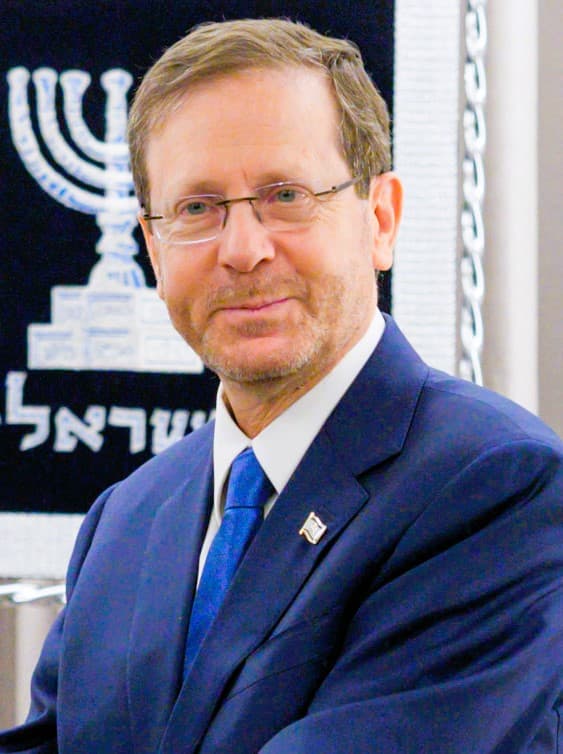
At least 10 delegations walked out as Israeli President Isaac Herzog (opens in a new tab) began speaking at the Conference on Interaction and Confidence Building Measures in Asia summit in Baku on 15 October 2026. Reports named Iran, Turkey, Kuwait, Pakistan and the Palestinian Authority among those leaving. Qatar's emir stayed in the room. The scene turned a summit designed around regional cooperation into a visible dispute over whether engagement with Israel can proceed normally while questions over Gaza remain unresolved.
Herzog was the immediate focus because he was representing Israel, but Israel's executive war policy is led by Prime Minister Benjamin Netanyahu (opens in a new tab). That distinction matters. The presidency is largely ceremonial and diplomatic, so the walkout was a protest against the state Herzog represented rather than evidence that he personally directed military operations. Herzog nevertheless chose the language and message of Israel's appearance at the summit and therefore owns the contrast between his call for cooperation and the refusal of several delegations to listen.
Azerbaijani President Ilham Aliyev (opens in a new tab) hosted a meeting whose stated purpose was dialogue, connectivity and confidence-building. The walkout exposed a weakness in that model: a forum cannot build confidence if major participants use the speaking order as a stage for mutual rejection. At the same time, the host's strongest defense is that the summit remained open to opposing governments and did not force a single political response. The fact that Qatar's Emir Tamim bin Hamad Al Thani (opens in a new tab) stayed is evidence that even governments critical of Israel did not all choose the same tactic.
The departing states also carry accountability for what their protest accomplishes. Turkey is led by President Recep Tayyip Erdogan (opens in a new tab), and Iran by President Masoud Pezeshkian (opens in a new tab) within Iran's broader political system. Their delegations can argue that remaining seated would normalize an Israeli government facing serious allegations over civilian harm and unresolved investigations. Walking out communicates that objection quickly. But symbolic departure does not itself secure humanitarian access, establish legal responsibility or produce a negotiated change in policy. A diplomatic gesture can be morally expressive while still being operationally limited.
The human issue underneath the theater is the Gaza war and the unresolved question of accountability for civilian deaths and injuries. A separate BBC Verify investigation published the same day found that at least 254 announced Israeli military investigations into alleged killings or injuries had no public outcome. That does not establish guilt in those cases, but it helps explain why diplomatic frustration has persisted. Governments leaving Herzog's speech were reacting in an environment where demands for visible accountability remain unanswered.
Herzog's strongest defense is the one he offered through the summit's cooperation language: communication between adversaries is precisely what regional forums are for. If states only remain in the room for speakers they already support, opportunities for direct challenge and negotiation shrink. That defense is stronger because some delegations did remain. Yet it also places a burden on Herzog and the Israeli state to show that dialogue is connected to concrete answers about investigations, civilian protection and future policy rather than functioning as a substitute for them.
The contradiction therefore runs in both directions. Israel promotes regional cooperation while carrying an unresolved wartime accountability burden. Walkout states condemn Israel's conduct while abandoning the room in which they could confront its president directly. Azerbaijan promotes bridging and confidence while hosting a summit marked by a coordinated exit. None of those contradictions makes one side's stated concern automatically false; they show the limits of symbolic diplomacy when the underlying conflict remains active.
The next test is whether the walkout changes anything after the cameras move on. The departing governments can pursue legal, humanitarian or diplomatic measures that match the strength of their protest. Israel can publish more investigative outcomes and use Herzog's diplomatic role to answer rather than only reject criticism. Azerbaijan and the CICA membership can decide whether future sessions need formats that preserve engagement even during acute disputes. For now, the Baku walkout is best read as a measure of political isolation among part of the room, not as proof of a unified regional position.
Questions people ask
Who is Isaac Herzog?
Isaac Herzog is the president of Israel, a primarily representative head-of-state role distinct from the prime minister's executive leadership. He has served in the office since 2021.
Why did delegations walk out of Herzog's speech?
The walkout was a diplomatic protest connected to Israel's conduct and accountability during the Gaza war. Reports named Iran, Turkey, Kuwait, Pakistan and the Palestinian Authority among the delegations that left.
What is the CICA summit in Baku?
CICA is the Conference on Interaction and Confidence Building Measures in Asia, a multilateral forum focused on security, cooperation and confidence-building. Azerbaijan hosted the 15 October 2026 summit in Baku.
Evidence
The sources this article cites, claim-bearing material first.
More analysis
Ranked by shared facts, drivers and people — never by publication date alone.
Articles12
- Why 254 IDF Investigations Still Have No Public OutcomeShares the driver: Media Freedom · 15 October 2026
- Why India's Supreme Court Put the Election Commission on NoticeShares the driver: Media Freedom · 15 October 2026
- Why Najmeh Amini Was Sentenced to Death for Alleged Blasphemy in IranShares the driver: Media Freedom · 15 October 2026
- Why Trump Canceled the Nidal Hasan Execution LivestreamShares the driver: Media Freedom · 15 October 2026