Who Attacked European Diplomats in Taybeh?
TL;DR
On 17 October 2026, masked attackers described as Israeli settlers struck a European diplomatic delegation and Palestinian olive harvesters near Taybeh in the occupied West Bank. Belgian Foreign Minister Maxime Prévot condemned the incident; the Israeli military said the visit had not been coordinated and the event was under investigation.
By the Factrail desk · Method: how we source and score · Last reviewed
Key graph impact
The article explains graph entities; the causal edges belong to the facts and drivers it links to.
- ArticleWho Attacked European Diplomats in Taybeh?
- explainsDriverIsrael–Gaza war (Oct 2023+)
- strengthensIndicators (6)Global deaths from organized violence (UCDP)
- ArticleWho Attacked European Diplomats in Taybeh?
- explainsDriverRule of Law
- weakensIndicators (4)Rule of Law Gap from the Highest Governance Score
- ArticleWho Attacked European Diplomats in Taybeh?
- explainsDriverSmotrich finance and West Bank civilian-admin dual hat
- strengthensIndicators (2)People Internally Displaced by Conflict and Violence (IDMC)
Strengthens · 85% impact strength
Observed
245k deaths per year · 195k above the normal line (2025)
Worse than normalAbove normal = worse
Strengthens · 85% impact strength
Observed
69M people (stock, end-of-year) · 28M above the normal line (2025)
Worse than normal3 readings, 2023–2025: rose from 68M people (stock, end-of-year) to 69M people (stock, end-of-year).
Above normal = worse · Lag ~7 d
Weakens · 74% impact strength
Observed
43.9 Score · 43.9 above the normal line (2024)
Worse than normal26 readings, 1996–2024: rose from 43 Score to 43.9 Score.
Normal is zero · any amount = worse
- Better
Strengthens · 68% impact strength
Observed
0.62 score from 0 to 1 · 0.25 below the normal line (2024)
Worse than normal125 readings, 1900–2024: rose from 0.37 score from 0 to 1 to 0.62 score from 0 to 1.
Above normal = better
Article
Masked Settlers Attack European Diplomats in Taybeh — and Israel Blames the Itinerary
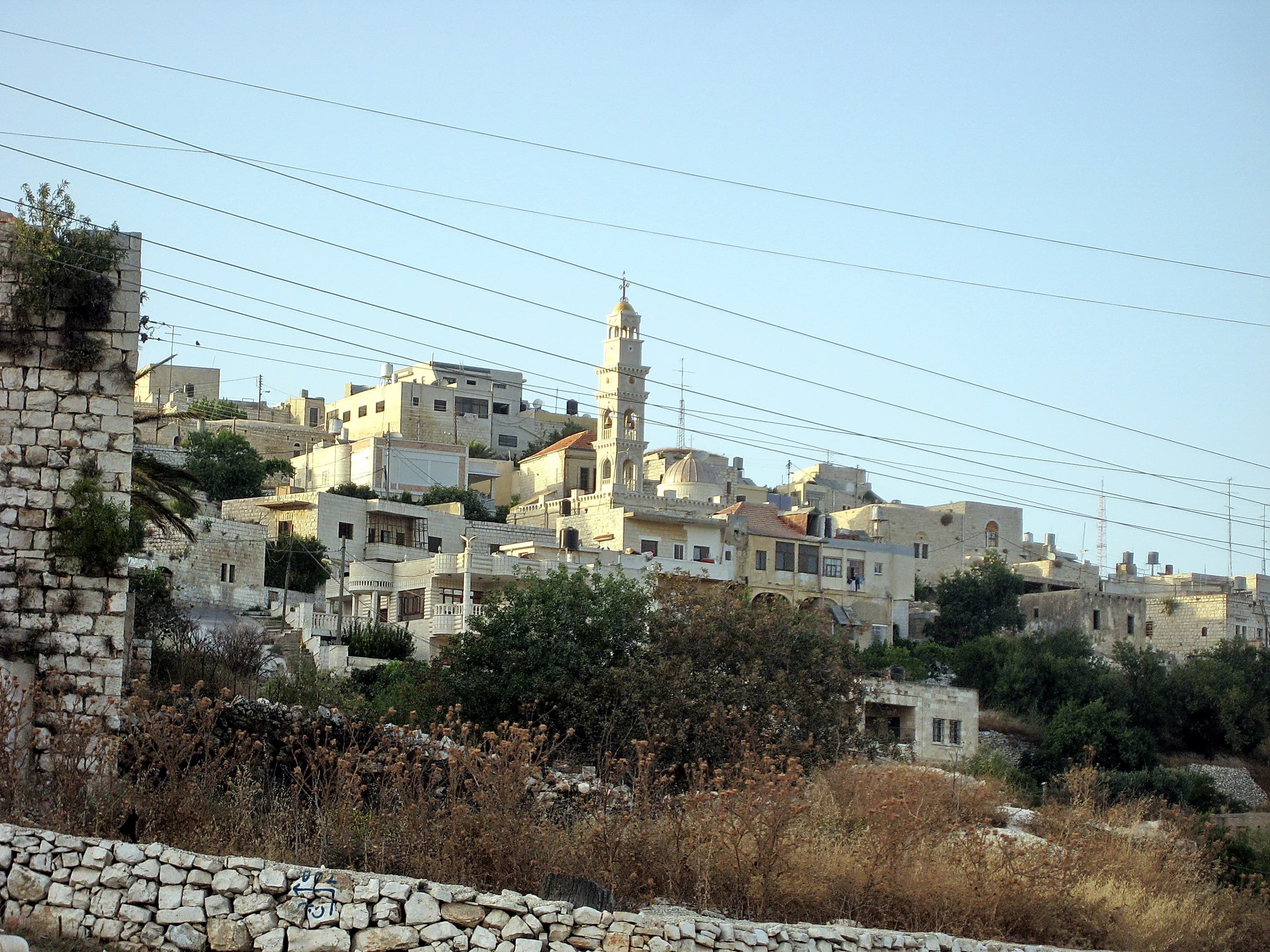
A delegation including French, Belgian and Polish representatives encountered a violent attack in Taybeh, a Palestinian town east of Ramallah, on 17 October 2026. Local accounts blamed masked Israeli settlers; a window of a Belgian diplomatic vehicle was smashed, and Palestinian olive pickers and other residents were injured. The immediate test for the Israeli authorities is whether their announced review becomes an effective investigation into specific perpetrators, not merely a dispute over whether diplomats gave notice of their itinerary.
What happened after the town ceremony?
The visitors had attended a ceremony linking Taybeh with the French town of Saint-Pierre, according to Taybeh mayor Suleiman Khourieh. Anadolu reported that French and Belgian consular officials, a Polish representative and Saint-Pierre mayor Christian Ravain were present. The group then moved toward an area where people were gathering olives. Witnesses described attackers throwing stones and wielding clubs; reporting from Israeli and Palestinian sources describes masked men, and some accounts mention all-terrain vehicles. The details should not be treated as established criminal findings until investigators identify those involved.
Footage cited in reporting showed a man on the ground near the attacked vehicles. Anadolu, relying on Israeli Army Radio, identified him as French local politician and mayor Bernard Boudot. Earlier accounts had not established the injured man's name; readers should distinguish a reported identification from a verified injury diagnosis. The damaged Belgian window is separately reported by multiple outlets. It makes the diplomatic dimension tangible without overshadowing the Palestinian civilians whose olive harvest had brought them to the location.
Why the response from Israeli authorities matters
Israel's military said the incident was being reviewed. Its explanation also drew attention to a visit said not to have been coordinated in advance and to the absence of soldiers at the site. Coordination could affect the practical ability to provide advance security; it does not excuse civilians throwing stones at vehicles or assaulting harvesters. The relevant legal questions are who attacked whom, what warnings were issued, whether assistance was sought and whether the police preserve evidence and make lawful arrests.
Responsibility for investigating specific alleged assailants must not be casually converted into a claim that every Israeli soldier or official participated. But senior officials such as Benjamin Netanyahu (opens in a new tab), Bezalel Smotrich (opens in a new tab) and Itamar Ben-Gvir (opens in a new tab) face broader political scrutiny over protection of people in the occupied territory and effective responses to recurring settler violence. Any allegation that an individual ordered this particular incident would require separate evidence and is not made here.
The people caught between diplomacy and harvest
Taybeh is home to Palestinian Christians, and its residents have described repeated settler harassment. For farming families, the olive harvest is both seasonal income and an important marker of community life. An attack at the harvest can deter families from returning to their fields, even where the directly recorded damage is a window or several injuries. That second-order effect should be treated as a risk and testimony, not quantified as a proved economic loss without agricultural or victim records.
The latest assault also fits a broader pattern of reported harvest-season attacks, including violence affecting journalist Heidi Levine. That earlier event is covered in the separate West Bank harvest attack background (opens in a new tab). It should not be merged with the Taybeh incident: this event involves visiting diplomats and a local twinning ceremony, creating distinct questions about foreign representation, protection and international response. The underlying West Bank administration and settlement driver (opens in a new tab) helps readers explore a longer policy context without claiming the two attacks had the same perpetrators.
Europe's condemnation and the question of consequences
Belgian foreign minister Maxime Prévot (opens in a new tab) condemned the attack and promoted renewed discussion of sanctions on violent settlers and those supporting them. France and Poland had representatives in the affected party, while Emmanuel Macron (opens in a new tab) and EU foreign-policy figures such as Kaja Kallas (opens in a new tab) are relevant to the institutions that would make collective action possible. A single minister cannot enact a bloc-wide measure alone; any restrictive measure would require the applicable EU legal and political procedure.
The strongest defence offered by the Israeli military in the reporting is that the delegation had not coordinated its movement, leaving forces absent from the scene. The stronger counterpoint is straightforward: prior notification may assist protection, but civilians should not be attacked for entering an area or harvesting. The distinction between security logistics and accountability for violence is not technical. It determines whether authorities take the assault seriously even when the visitors' route was unexpected.
What happens next?
The consequential questions are whether Israeli police identify suspects, interview the diplomats and harvesters, preserve the video and explain publicly what happened; whether Belgium, France and Poland receive formal responses; and whether EU members agree measures that match documented wrongdoing. Immediate condemnation is a beginning, not a completed protection policy. At the time of publication review, no verifiable public outcome of the investigation had been established. This story concerns a new 17 October attack and should not displace the earlier reporting on the same harvest season.
Questions people ask
Who attacked European diplomats in Taybeh?
Local witnesses and several reports attributed the 17 October attack to masked Israeli settlers.
Was a French mayor injured in the West Bank?
Reports showed a French local official on the ground, with Anadolu citing an Israeli broadcaster identifying mayor Bernard Boudot. The extent of any injuries was not independently established in the reviewed material.
Will the EU sanction violent settlers?
Belgium called for sanctions and pressure, but a political demand is not the same thing as an adopted EU decision. Further action depends on evidence and EU procedures.
Evidence
The sources this article cites, claim-bearing material first.
- aa.com.tr · aa.com.tr — www.aa.com.tr
- ynetnews.com · ynetnews.com — www.ynetnews.com
- middleeasteye.net · middleeasteye.net: settlers attack diplomatic delegation west bank including french consul
- middleeasteye.net · middleeasteye.net: palestinian christians taybeh face continuing settler attacks despite military c
More analysis
Ranked by shared facts, drivers and people — never by publication date alone.
Articles12
- Who Attacked Heidi Levine in the West Bank?Shares the driver: Smotrich finance and West Bank civilian-admin dual hat · 17 October 2026
- Why Delegations Walked Out on Isaac Herzog at the CICA Summit in BakuShares the driver: Rule of Law · 15 October 2026
- Why 254 IDF Investigations Still Have No Public OutcomeShares the driver: Rule of Law · 15 October 2026
- Navi Pillay: Why the Nobel Winner Wants Netanyahu TriedShares the driver: Rule of Law · 15 October 2026