Putin’s Kaliningrad warning turns deterrence into an evidence test
TL;DR
Russia says an attack or attempt to isolate Kaliningrad could put its full arsenal on the table. The accountability problem is to distinguish an explicit Russian escalation warning from claims that NATO has actually ordered the attack or blockade Moscow invokes.
By the Factrail desk · Method: how we source and score · Last reviewed
Key graph impact
The article explains graph entities; the causal edges belong to the facts and drivers it links to.
- ArticlePutin’s Kaliningrad warning turns deterrence into an evidence test
- mentionsDriverUkraine war (Crimea–Donbas–2022+)
- strengthensIndicators (5)Global deaths from organized violence (UCDP)
Strengthens · 85% impact strength
Observed
245k deaths per year · 195k above the normal line (2025)
Worse than normalAbove normal = worse
- Worse
Strengthens · 80% impact strength
Observed
69M people (stock, end-of-year) · 28M above the normal line (2025)
Worse than normal3 readings, 2023–2025: rose from 68M people (stock, end-of-year) to 69M people (stock, end-of-year).
Above normal = worse · Lag ~30 d
Strengthens · 40% impact strength
Observed
11% of primary-school-age children · 11 above the normal line (2023)
Worse than normalAbove normal = worse
Weakens · 40% impact strength
Observed
73.7% · 1.92 above the normal line (2024)
Better than normal7 readings, 2018–2024: rose from 69.4% to 73.7%.
Above normal = better
Article
Vladimir Putin (opens in a new tab) said Russia could place “all” weapons available to it on the agenda if Russian territory were directly attacked, explicitly discussing the Baltic exclave of Kaliningrad.
The phrase is significant because Russia possesses nuclear weapons and Kaliningrad sits between NATO members Poland and Lithuania. Russian officials have also warned against attempts to isolate the exclave.
But deterrence rhetoric operates through conditional statements, and the condition matters as much as the threat.
Putin’s statement describes what Russia says it might do if Kaliningrad were attacked. It does not demonstrate that NATO has decided to attack Kaliningrad.
That distinction becomes essential when diplomatic warnings, military exercises, contingency planning and actual operational orders circulate in the same information environment.
Governments routinely plan for scenarios they say they hope never occur. NATO states can strengthen forces around the Baltic without that fact alone proving a plan to seize Russian territory. Russia can warn about a hypothetical blockade without proving that such a blockade has been ordered.
When those distinctions disappear, contingency becomes intention and intention can then be cited as justification for further escalation.
Kaliningrad makes that feedback loop unusually dangerous.
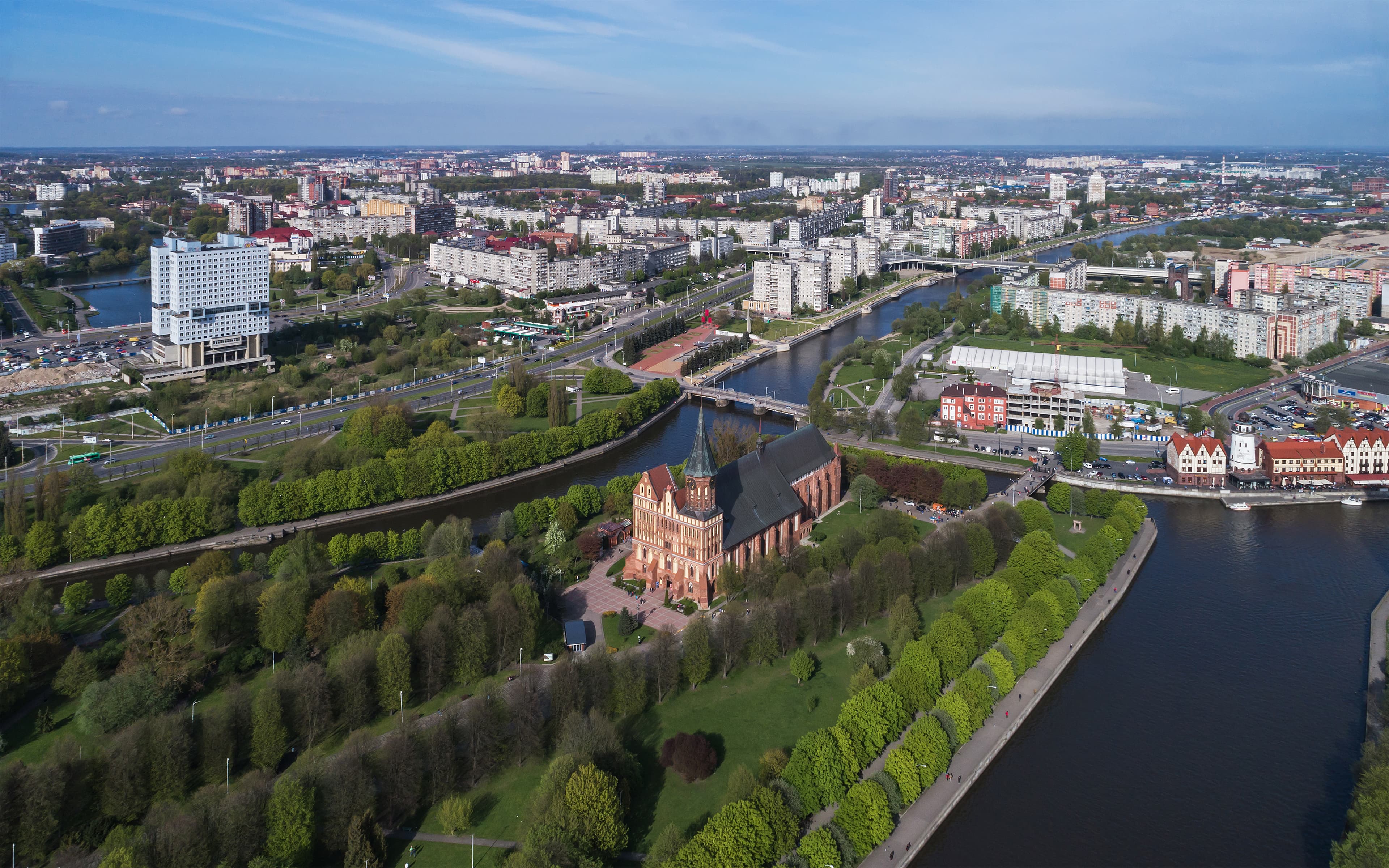
The region is physically separated from the rest of Russia, bordered by Lithuania and Poland and connected to the Baltic Sea. Its geography means that any serious Russia–NATO crisis would immediately raise questions of supply, maritime access, airspace and the movement of forces.
It is therefore a genuine military vulnerability rather than an invented location.
The accountability problem is how leaders communicate about that vulnerability.
Nuclear deterrence is designed partly to influence an opponent’s expectations before an attack occurs. A threat can therefore be strategically intentional without being evidence that the threatened scenario is already happening.
Putin’s statement should be recorded as an escalation signal from the Russian presidency: direct military action against Russian territory, including Kaliningrad, could trigger consideration of the full Russian arsenal.
The next evidentiary question concerns what Russia says the threat is.
Russian diplomatic and media claims about NATO plans should be tested against NATO documents, member-state orders, force movements and official statements. Where evidence demonstrates military preparation, it should be described specifically. Where a blockade or annexation plan remains an allegation, it should stay labelled as one.
The same standard applies to Western descriptions of Russian intent.
The Ukraine war (opens in a new tab) has already created repeated episodes in which exercises, deployments, missile transfers and rhetoric are interpreted through worst-case assumptions. That environment makes precise language a form of risk control.
The underlying conflict began with the Russian invasion of Ukraine in 2022 (opens in a new tab). But the existence of that aggression does not mean every later claim about a different NATO–Russia scenario becomes self-proving.
Nor does acknowledging uncertainty about a NATO blockade claim make the Russian nuclear warning unimportant.
The welfare stakes are exceptionally large precisely because deterrence works through uncertainty. Political leaders can increase risk before weapons are fired by narrowing the opponent’s perceived room for error.
The accountability lever is therefore public evidence.
What military action has actually been ordered? Which forces have actually moved? What diplomatic demand has actually been issued? Which statement is an explicit threat, and which is an interpretation of another state’s motive?
Kaliningrad does not need exaggerated claims to be dangerous. Its geography, military importance and proximity to NATO territory already make escalation there consequential.
The strongest reporting therefore does the opposite of escalation rhetoric: it keeps the hypothetical condition separate from the demonstrated fact.
Evidence
The sources this article cites, claim-bearing material first.
- BelTA / Presidency of Belarus · BelTA — Lukashenko confirms missile launch from Belarus at Ukraine, 27 February 2022
More analysis
Ranked by shared facts, drivers and people — never by publication date alone.
Articles12
- Russia’s war budget reaches deeper into private fortunesShares the driver: Ukraine war (Crimea–Donbas–2022+) · 3 October 2026
- Kyiv’s bridges turn mobility into a pressure pointShares the driver: Ukraine war (Crimea–Donbas–2022+) · 3 October 2026
- Britain widens the sanctions chain from deported children to LNG shippingShares the driver: Ukraine war (Crimea–Donbas–2022+) · 3 October 2026
- The Volgograd refinery strike moves Ukraine’s campaign upstreamShares the driver: Ukraine war (Crimea–Donbas–2022+) · 3 October 2026