Russia’s war budget reaches deeper into private fortunes
TL;DR
Hundreds of billions of roubles in officially described voluntary contributions reveal a fiscal system in which wartime financing increasingly extends beyond ordinary taxation and borrowing. Reuters reported on October 2 that wealthy Russians supplied 471 billion roubles — about $5.6 billion — in officially described “voluntary” contributions to the state in 2026, equivalent to more than 1% of federal spending.
By the Factrail desk · Method: how we source and score · Last reviewed
Key graph impact
The article explains graph entities; the causal edges belong to the facts and drivers it links to.
- ArticleRussia’s war budget reaches deeper into private fortunes
- mentionsDriverUkraine war (Crimea–Donbas–2022+)
- strengthensIndicators (5)Global deaths from organized violence (UCDP)
Strengthens · 85% impact strength
Observed
245k deaths per year · 195k above the normal line (2025)
Worse than normalAbove normal = worse
- Worse
Strengthens · 80% impact strength
Observed
69M people (stock, end-of-year) · 28M above the normal line (2025)
Worse than normal3 readings, 2023–2025: rose from 68M people (stock, end-of-year) to 69M people (stock, end-of-year).
Above normal = worse · Lag ~30 d
Strengthens · 40% impact strength
Observed
11% of primary-school-age children · 11 above the normal line (2023)
Worse than normalAbove normal = worse
Weakens · 40% impact strength
Observed
73.7% · 1.92 above the normal line (2024)
Better than normal7 readings, 2018–2024: rose from 69.4% to 73.7%.
Above normal = better
Article
Russia’s war financing is increasingly difficult to describe as a conventional state budget funded only by taxes, energy revenue and borrowing. Reuters reported on October 2 that wealthy Russians supplied 471 billion roubles — about $5.6 billion — in officially described “voluntary” contributions to the state in 2026, equivalent to more than 1% of federal spending.
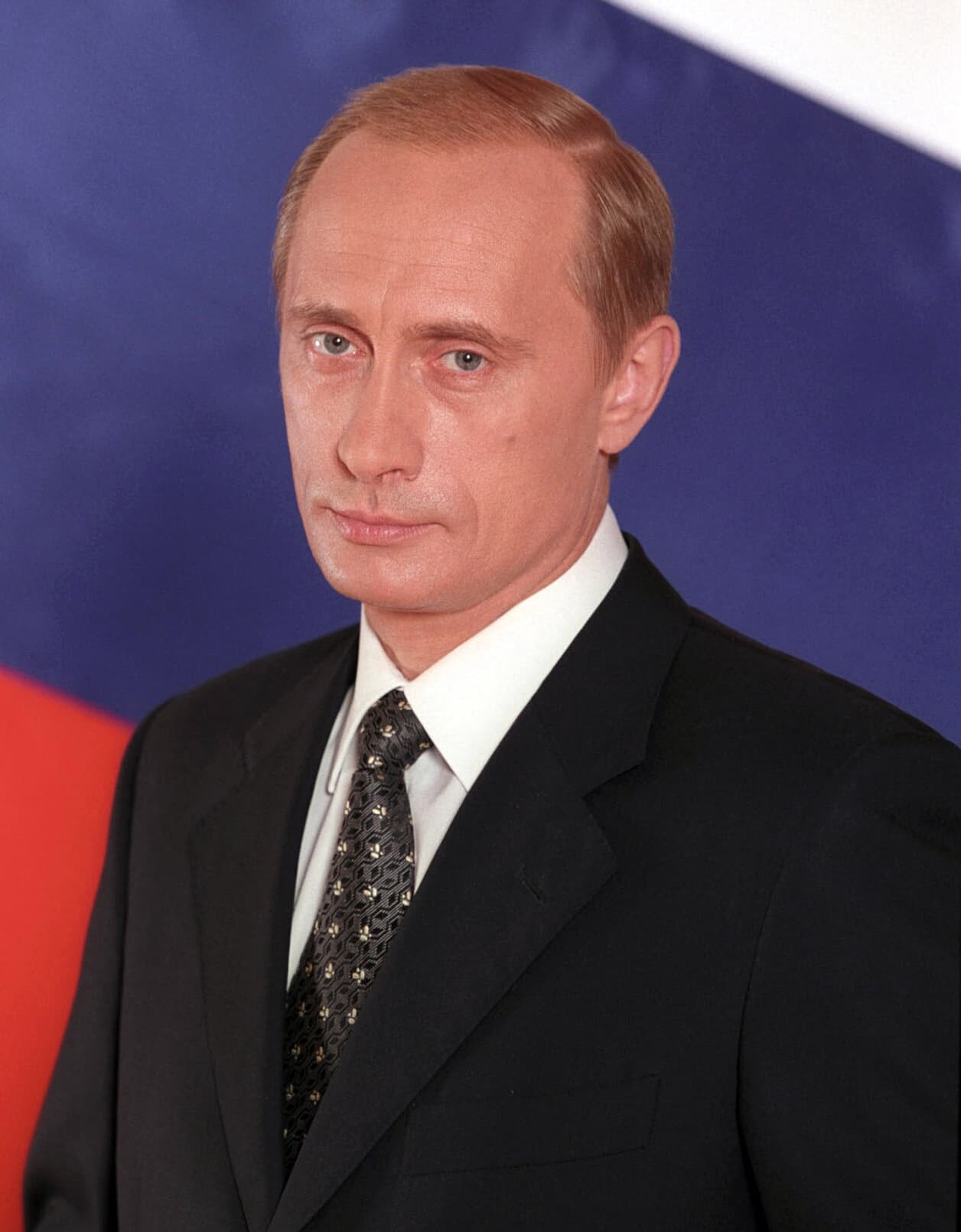
The number is notable, but the mechanism matters more. According to Reuters, the contributions followed a closed March meeting between Vladimir Putin (opens in a new tab) and prominent business figures. The Kremlin said an unnamed businessman argued that wealthy Russians whose fortunes had roots in the privatisations and state relationships of the 1990s had a duty to contribute more.
There is not enough public evidence to describe every payment as coerced, and the official label remains “voluntary.” But voluntariness becomes an accountability question when major private fortunes operate inside a political system capable of taxation, regulatory pressure, prosecution, asset seizure and state-directed redistribution. The relevant issue is therefore not to replace the government’s label with an unsupported one. It is to ask how much meaningful bargaining power exists when the state soliciting the contribution also controls the legal environment in which the contributor’s assets exist.
The fiscal context raises the stakes. Reuters reported that Russia now expects a 2026 federal deficit of around 7.3 trillion roubles, or 3.2% of GDP, roughly double the original deficit forecast. Without the wealthy contributors’ payments, the deficit would have been slightly larger. Moscow is also planning revenue from seized assets, increasing taxes and borrowing, while military and security spending is expected to account for about 38% of the budget.
That is where the Ukraine war (opens in a new tab) connects to household welfare inside Russia as well as to the destruction inside Ukraine. War spending is not financed from a separate account isolated from the civilian economy. Money raised through taxes, private contributions, asset sales and debt represents resources that can no longer be used in exactly the same way elsewhere. The distribution of that burden — between ordinary taxpayers, corporations, depositors, wealthy asset holders and future budgets — is a political choice.
The underlying conflict remains the one created by the 2022 Russian invasion of Ukraine (opens in a new tab). As that war persists, its fiscal machinery becomes part of the accountability record. A government can sustain military expenditure by taxing citizens, borrowing against future revenue, monetising assets, extracting extraordinary contributions or reducing other spending. Each method allocates the burden differently.
The 471 billion-rouble figure therefore should not be treated as a curiosity about oligarchs. It shows the Russian state broadening the set of financial channels available to sustain a fifth year of war. Whether particular transfers were freely offered cannot be inferred from the total alone. What can be observed is that the boundary between public war finance and concentrated private wealth is becoming more permeable.
For Factrail, the lever is fiscal mobilisation. The output is additional state revenue. The downstream question is who ultimately absorbs the opportunity cost: private owners, workers and consumers, taxpayers, future borrowers, or public services. That causal chain is more useful than simply describing the payments as patriotic generosity or forced tribute without evidence sufficient for either conclusion.
Evidence
The sources this article cites, claim-bearing material first.
- BelTA / Presidency of Belarus · BelTA — Lukashenko confirms missile launch from Belarus at Ukraine, 27 February 2022
More analysis
Ranked by shared facts, drivers and people — never by publication date alone.
Articles12
- Britain widens the sanctions chain from deported children to LNG shippingShares the driver: Ukraine war (Crimea–Donbas–2022+) · 3 October 2026
- Putin’s Kaliningrad warning turns deterrence into an evidence testShares the driver: Ukraine war (Crimea–Donbas–2022+) · 3 October 2026
- The Volgograd refinery strike moves Ukraine’s campaign upstreamShares the driver: Ukraine war (Crimea–Donbas–2022+) · 3 October 2026
- Kyiv’s bridges turn mobility into a pressure pointShares the driver: Ukraine war (Crimea–Donbas–2022+) · 3 October 2026