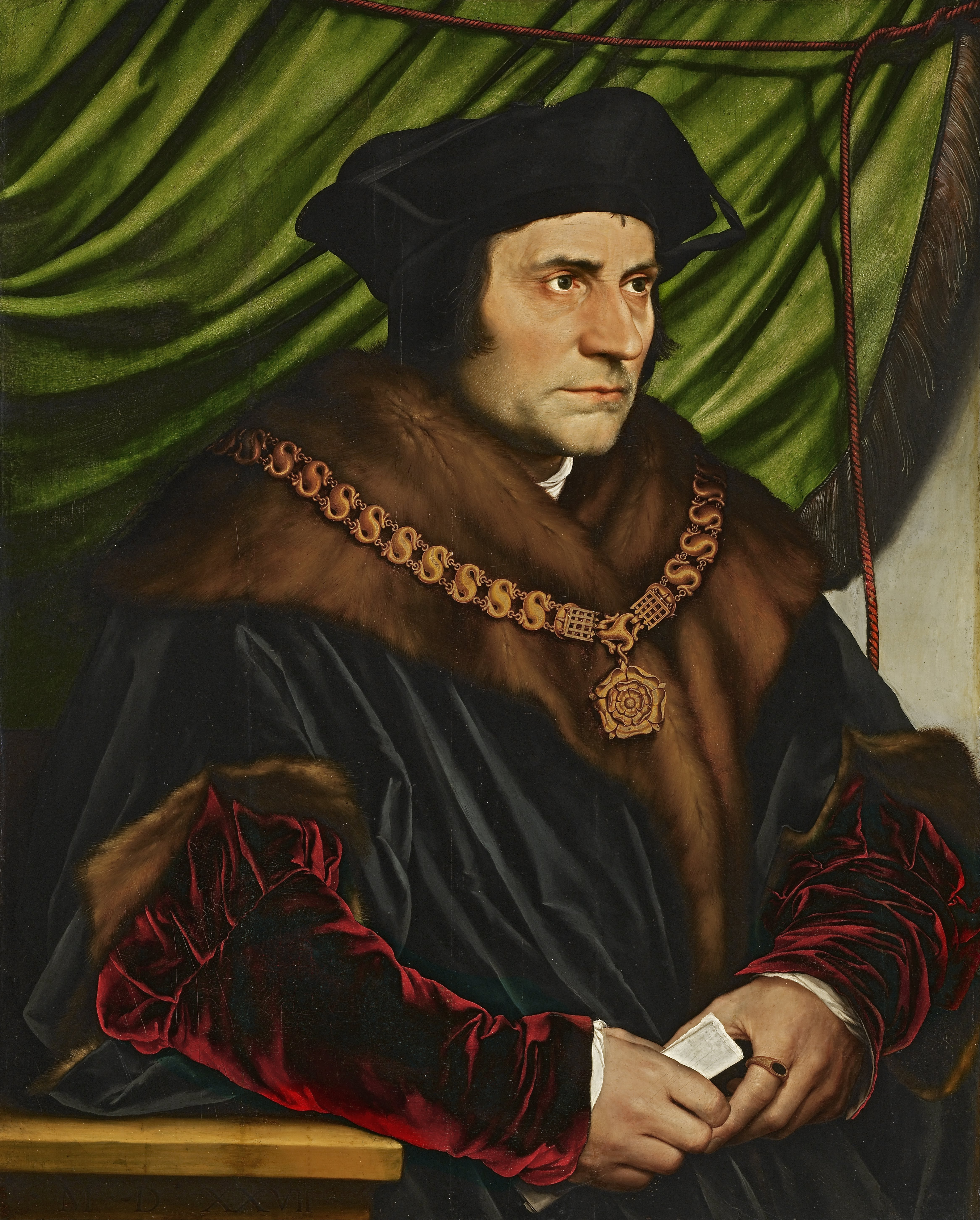
The first fact about Thomas More in a public catalog is a Tower death and a heresy office, not a marble of conscience alone. History of Parliament Online at https://www.historyofparliamentonline.org/node/51193/ (opens in a new tab) dates Speakership, chancellorship, resignation, trial, and death. HRP at https://www.hrp.org.uk/tower-of-london/history-and-stories/sir-thomas-more/ (opens in a new tab) presents the Tower killing site. TNA at https://www.nationalarchives.gov.uk/ (opens in a new tab) and British History Online at https://www.british-history.ac.uk/ (opens in a new tab) calendar the paper. Britannica at https://www.britannica.com/biography/Thomas-More-English-humanist-and-statesman (opens in a new tab) and Essential More at https://essentialmore.org/ (opens in a new tab) carry the Yale edition’s public face. During 1529–32 he was first port of call for London heresy arrests and wrote in defence of punishment; he did not sit as a heresy judge. That limit is stored, not as innocence and not as a unique six-fire confession. The 1529 Dialogue Concerning Heresies is polarising print against Tyndale. On 17 April 1534 he entered the Tower for refusing the succession oath. On 1 July 1535 a Westminster commission condemned him; Rich’s testimony stays testimony. On 6 July he was beheaded. 1935 canonisation is posthumous and is not a Fact. Offsets are also URLs. Utopia (1516) at https://www.gutenberg.org/ebooks/2130 (opens in a new tab) is a public English carrier of the Louvain book. UK Parliament at https://www.parliament.uk/ (opens in a new tab) remembers the 1523 Speaker. The 16 May 1532 resignation after the Submission of the Clergy and the 1530 withheld signature on the Catherine letter are conscience offsets beside the same man’s heresy office. The British Library at https://www.bl.uk/ (opens in a new tab) is a Tudor print heading. What the score must not say: that he drafted the Act of Supremacy; that he personally sentenced every burning of 1529–32; that 1516 cancels 1535; that 1935 is 1535; that Erasmus wrote Utopia. Complex contribution is the honest type. Confidence is high on offices, 16 May 1532, 17 April 1534, 1 July and 6 July 1535; medium on unique personal agency in each heresy case; low on private Tower conversations as a tape. Related people are Erasmus, Henry VIII, Fisher, Roper, Cromwell, Wolsey, Catherine of Aragon, Anne Boleyn. 1516 is a book. 1529 is a seal. 1532 is a resignation. 1535 is a trial and, separately, a death. Keep them unmerged. UK Parliament at https://www.parliament.uk/ (opens in a new tab) and the British Library at https://www.bl.uk/ (opens in a new tab) are institutional headings of the 1523 Speakership and Tudor print. TNA at https://www.nationalarchives.gov.uk/ (opens in a new tab) calendars the 1534 committal. A reader checking this Person should open History of Parliament, HRP Tower, Essential More, Britannica, and the 1535 dates, then stop. Posthumous canonisation, critical editions, and political reception by later states are evidence, not additional acts. A halo is still not a 1535 scaffold. A scaffold is still not a 1516 book. Later parliamentary biographies, Tower pages, and encyclopedia files remain evidence, not additional lifetime acts. Shared work with Erasmus, Roper, and unnamed clerks remains named. He did not file 1935. A pope did that work. Canonisation is not a Fact.