Skip to content
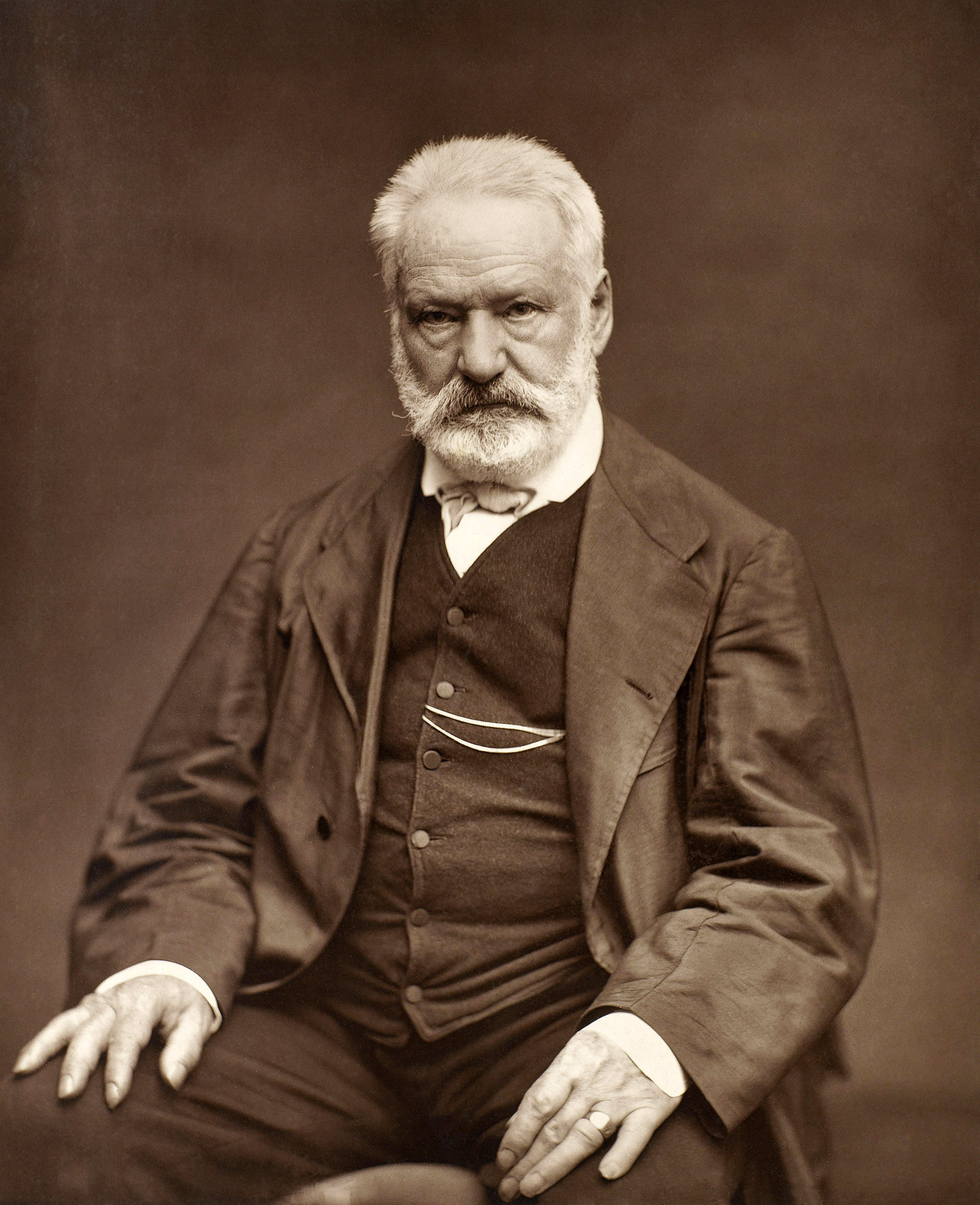
Victor Hugo

Victor Hugo

0

Near balanceFormula-derived score

French writer and politician (1802–1885). Documented harms: Restoration odes, 1841 Academy co-option, 1845 peerage, 1848 Bonapartist proximity, 1879 Africa speech, 1885 Panthéon cult. Offsets: 1829 condemned-man book, Notre-Dame 1831, 1852 Napoléon le Petit, Les Misérables 1862, amnesty oratory.

Romantic monument-and-novel publicityexile liberalism against the Empirecivilising-Africa oratory beside death-penalty campaigns

Impact

Not rated yet: the verified records linked to this person, without a numeric impact.

Editorial assessment (context, not the score)

The page is not a musical and not a colonial-captain cartoon. The heaviest documented costs are Restoration-to-peerage prestige, pre-coup proximity, the 1879 Africa speech, and the 1885 Panthéon cult. The offsets are real: 1829 and 1834 against the scaffold, 1852 against the coup, 1862 as poverty-critique, amnesty oratory, museums and free texts. He did not file 1885’s cortège or a 1997 Gallica object. Confidence is high on imprints and offices, medium on unique colonial coefficients from a banquet.

Indicators affected

Indicators this person’s verified facts reach. No score contribution is assigned; the observed state is the indicator’s own reading.

Accountability & contradictions

Claims against the record, the type of responsibility, and what is disputed.

What could change this assessment

  • 5 linked facts have no assessed welfare direction yet.
  • Lifetime coverage has not been assessed: the record reflects stored facts only (1826–1885).

Causal path

Person → Fact → Driver → Indicator. Select a path to inspect its factors; the full network opens on demand.

Timeline

The most relevant dated facts, newest first.

Evidence & methodology

How the record is sourced and how the score is derived.

30 of 30 linked facts verified, drawing on 14 distinct sources (1826–1885).

Sources include Centre des monuments nationaux, Le Monde diplomatique, Sénat, Bibliothèque nationale de France, Maisons Victor Hugo / Paris Musées, Project Gutenberg, Jersey Heritage, Encyclopaedia Britannica.

Sources (showing 8 of 14)

  1. 1.Gallica — Bibliothèque nationale de FranceBibliothèque nationale de France
  2. 2.Maisons Victor Hugo — Paris and GuernseyMaisons Victor Hugo / Paris Musées
  3. 3.Le Monde diplomatique — Hugo, Discours sur l’Afrique (1879 text)Le Monde diplomatique
  4. 4.Sénat (France)Sénat
  5. 5.Les Misérables — public-domain EnglishProject Gutenberg
  6. 6.Britannica — Victor HugoEncyclopaedia Britannica
  7. 7.Assemblée nationale — 2022 resultsAssemblée nationale
  8. 8.Académie française — Victor HugoAcadémie française

The score is formula-derived (Factrail formula v1, version 1.0.0), not an editorial verdict. Read the methodology.

By the Factrail desk · Method: how we source and score · Last reviewed · Sources: 14

Expert analysis

An excerpt; the full analysis opens on request.

The first fact about Victor Hugo in a public catalog is not a musical. It is a Restoration ode-book and then a scaffold novella. Le Dernier Jour d’un condamné (1829; English https://www.gutenberg.org/ebooks/7838 (opens in a new tab)) made the death penalty a first-person civic object. Gallica (https://gallica.bnf.fr/ (opens in a new tab)) holds the French file. Britannica (https://www.britannica.com/biography/Victor-Hugo (opens in a new tab)) dates the career. Those two publishers are not the same page. The Académie elected him on 7 January 1841 (https://www.academie-francaise.fr/les-immortels/victor-hugo (opens in a new tab)). Louis-Philippe named him pair de France on 13 April 1845. In 1848 he took an elected seat and, for a time, treated Louis-Napoléon as usable. After 2 December 1851 he fled. In 1879, as senator, he spoke the Discours sur l’Afrique at an abolition banquet (text reprinted at https://www.monde-diplomatique.fr/mav/107/HUGO/18320 (opens in a new tab)). That speech assigns Africa to Europe as light against sand. LICRA’s public reading (https://www.licra.org/18-mai-1879-victor-hugo-se-plante-sur-la-colonisation (opens in a new tab)) does not let Les Misérables delete it. The 1 June 1885 Panthéon funeral (https://www.paris-pantheon.fr/en/ (opens in a new tab)) is a state cult, not his last proof. The same file contains the offsets. Notre-Dame de Paris (1831; https://www.gutenberg.org/ebooks/2610 (opens in a new tab)) is monument-access and, on another row, an Esmeralda type. Napoléon le Petit (1852) is the coup-brief. Les Contemplations (1856) paid for Hauteville (https://www.maisonsvictorhugo.paris.fr/en/guernesey/house/visiting-hauteville-house-today (opens in a new tab)). Les Misérables (1862; https://www.gutenberg.org/ebooks/135 (opens in a new tab)) is inequality-critique and, on another row, a commodity. The 1849 Peace Congress speech and 1870s amnesty oratory are civic instruments. Maisons Victor Hugo (https://www.maisonsvictorhugo.paris.fr/en (opens in a new tab)) and the Assembly/Senate sites (https://www.assemblee-nationale.fr/ (opens in a new tab); https://www.senat.fr/ (opens in a new tab)) are later doors and office records. What the score must not say: that 1829 repealed the scaffold; that 1862 is an abolition of property; that 1879 is a private joke; that 1885’s crowd is his handwriting; that a Cambridge companion (https://www.cambridge.org/core/books/cambridge-companion-to-victor-hugo/ (opens in a new tab)) undid a banquet. Direct is honest for books and speeches. Complex is honest for Panthéon, restorers, and scans. Confidence is high on those URLs, medium on stereotype and restoration-overwrite signs. 1826 is not 1852. 1862 is not 1879. 1871 absence is not amnesty. Related people are Voltaire and Rousseau as French civic-letter counterparts, Shakespeare as the 1864 essay’s object, Goethe as European-poet counterpart, Louis-Napoléon as the named opponent after 1851, Lamartine as 1848 colleague, Dumas as a novel-market counterpart. The useful question is which public pages still move justice, colonial, and knowledge drivers without inventing a 2019 mason. Keep 1829 1845 1862 1879 and 1885 on separate dates. Later Loeb, UNESCO, and encyclopedia pages are evidence, not additional acts.

Dispute a fact on this pageNamed here, or represent someone who is? Request a right of reply.