Did JD Vance Disagree With Trump on Iran?
By the Factrail desk · Method: how we source and score · Last reviewed
TL;DR
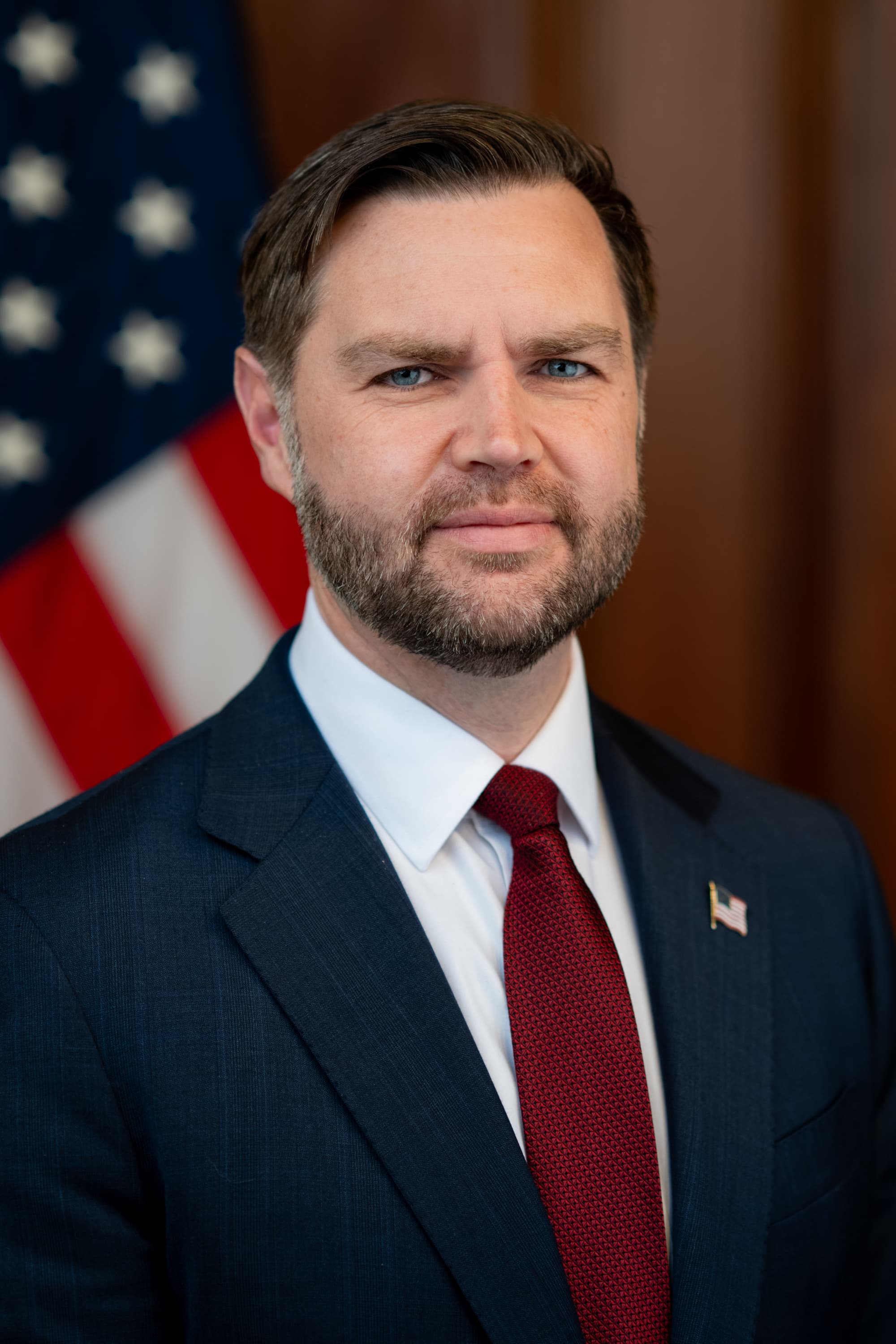
In a Sean Spicer interview reported on 17 October 2026, Vice President JD Vance said he had privately disagreed with Donald Trump over the Iran war. He simultaneously argued that they shared the need for a limited and defined objective; the precise substance of their disagreement was not public.
Key graph impact
The article explains graph entities; the causal edges belong to the facts and drivers it links to.
- ArticleDid JD Vance Disagree With Trump on Iran?
- explainsDriverMilitary Escalation Risk
- strengthensIndicators (2)Global deaths from organized violence (UCDP)
- ArticleDid JD Vance Disagree With Trump on Iran?
- explainsDriverExecutive-Power Concentration
- strengthensIndicators (4)Rule of Law Gap from the Highest Governance Score
- ArticleDid JD Vance Disagree With Trump on Iran?
- explainsDriverEnergy Security
- strengthensIndicators (4)Poverty headcount ratio at $3.00 a day (2021 PPP) (% of population)
Strengthens · 70% impact strength
Observed
245k deaths per year · 195k above the normal line (2025)
Worse than normalAbove normal = worse
Strengthens · 64% impact strength
Observed
43.9 Score · 43.9 above the normal line (2024)
Worse than normal26 readings, 1996–2024: rose from 43 Score to 43.9 Score.
Normal is zero · any amount = worse
Strengthens · 62% impact strength
Observed
10.4% · 10.2 above the normal line (2024)
Worse than normal7 readings, 2018–2024: fell from 11.1% to 10.4%.
Above normal = worse
Weakens · 60% impact strength
Observed
7.97% of population aged 16 years or over · 5.2 above the normal line (2025)
Worse than normal8 readings, 2018–2025: rose from 7.77% of population aged 16 years or over to 7.97% of population aged 16 years or over.
Above normal = worse · Lag ~3 mo
Article
Vance Admits He Disagreed With Trump on the Iran War — Then Said They Are Aligned
US Vice President JD Vance (opens in a new tab) acknowledged in an interview aired 16 October 2026 that he privately disagreed with Donald Trump (opens in a new tab) over the war with Iran. He nonetheless presented the administration as aligned on the need for a defined military objective. The distinction matters because private internal debate is not itself a change in policy, while admitting such debate invites questions about what options leaders considered before Americans and Iranians began bearing the war's human costs. The remarks were reported on 17 October by Yeni Şafak/Anadolu (opens in a new tab), Iran International (opens in a new tab) and Middle East Monitor (opens in a new tab).
What Vance actually acknowledged
Vance spoke on a show hosted by Sean Spicer, a former White House spokesperson. Reports described him recognizing that there had been private disagreements with Trump about the war while stressing their common preference for military action to have a discrete or achievable objective. That is a meaningful admission from a vice president associated with criticism of open-ended foreign interventions. Yet the reports do not provide a full internal record of National Security Council meetings, Vance's recommendations, or the president's response to them. Claiming to know those confidential discussions would exceed the available evidence.
The strongest defence of Vance is straightforward: a healthy executive branch can contain principled debate, and an official may disagree with a decision while still helping execute lawful policy. A defined objective could also limit mission creep. The criticism is that the public cannot evaluate whether the promised limits are real without a description of the goal, criteria for success and circumstances under which operations end. “Disagreement” and “alignment” are therefore not necessarily contradictory statements; the test is whether Vance identifies what changed between them.
The human cost is more than a political positioning question
Reporting on the interview cited Vance discussing 20 US service members killed in the conflict. The figure is an attributed remark that still needs checking against an official casualty record before it can serve as an independent total. Iranian civilian casualties, damage to public infrastructure and other countries' exposure to violence require their own evidentiary accounts. Neither side's suffering is nullified by a strategic case for military action. For relatives of US personnel, the questions are what mission their loved ones were sent to accomplish, what authority supported it and how risks were assessed.
President Trump argues that US action protects American interests and prevents Iranian military threats. Iran's authorities, including President Masoud Pezeshkian (opens in a new tab) and Supreme Leader Ali Khamenei (opens in a new tab), have their own responsibility for decisions affecting escalation, civilians and regional security. Stating those roles does not establish that one interview resolves the legal and factual arguments concerning the initiation or conduct of the war. Military necessity, proportionality and compliance with international humanitarian law require scrutiny of specific operations.
An argument inside a broader energy and shipping crisis
The war affects the risk of military escalation (opens in a new tab), maritime trade routes (opens in a new tab) and energy security. Shipping disruptions around the Strait of Hormuz can raise transport risk premiums and pressure fuel markets, though the impact of any single event must be substantiated rather than assumed. Separate coverage already addresses reported Hormuz attacks (opens in a new tab) and US diesel prices (opens in a new tab). Those articles provide background; they are not evidence that Vance's remarks caused prices to change.
The executive decision-making structure is equally important. Trump, as president, controls executive military direction subject to law and Congress's constitutional powers. Vance is not a parallel commander-in-chief. His admission matters to executive-power concentration (opens in a new tab) because it offers an uncommon public view of disagreement, not because it independently changes the chain of command. Voters should ask which authorizations and public objectives apply, not merely choose between the personalities of two leaders.
What the interview does not establish
Some commentary interprets the remarks as part of Vance's possible positioning for a future presidential contest. That is political analysis, not a reported fact about his intentions. Without evidence from Vance or his team, it would be misleading to assign an electoral motive to a description of private discussions. It would also be wrong to say he demanded immediate withdrawal, denounced Trump as unlawful or quit his job. The cited reporting supports none of those claims. Likewise, the existence of criticism among conservative commentators does not establish a unified anti-war bloc or any single preferred alternative plan.
The immediate questions are operational. What is the discrete objective Vance says both men share? How will success be measured? What conditions would extend or stop strikes? What reporting will Congress receive? Which civilian-protection and casualty data can be independently checked? Answers to those questions are more consequential than whether the disagreement was strategically convenient. The current development is a 16 October admission described in 17 October reporting, set against an ongoing conflict with measurable costs. The next meaningful news will be a policy clarification or a documented decision, not speculation about private political calculations.
Questions people ask
Did JD Vance disagree with Trump on the Iran war?
Yes. Reports of his 16 October interview say he acknowledged private disagreement while emphasizing a shared objective.
How many US troops have died in the Iran war?
The interview coverage cited 20 US service members; that figure has not been checked against an official casualty database.
What did Vance tell Sean Spicer?
He described internal disagreement but maintained that he and Trump wanted military operations to pursue a defined objective.
<!-- PART 3 — articles M6–M8 -->Evidence
The sources this article cites, claim-bearing material first.
- en.yenisafak.com · en.yenisafak.com — en.yenisafak.com
- iranintl.com · iranintl.com — www.iranintl.com
- middleeastmonitor.com · middleeastmonitor.com — www.middleeastmonitor.com
More analysis
Ranked by shared facts, drivers and people — never by publication date alone.
Articles12
- Zelenskyy: Diesel Deal Puts Cash in Putin’s PocketShares the driver: Military Escalation Risk · 17 October 2026
- Why Are US Diesel Prices Rising? Trump vs UkraineShares the driver: Security of Maritime Trade Routes · 17 October 2026
- Why Did Trump Waive Graham Act Sanctions?Shares the driver: Executive-Power Concentration · 17 October 2026
- Russia Hit 9 Ukraine Regions: 8 Dead, Power CutShares the driver: Military Escalation Risk · 17 October 2026