Zelenskyy: Diesel Deal Puts Cash in Putin’s Pocket
TL;DR
At the 16 October 2026 EU summit, Volodymyr Zelenskyy argued that the U.S.-Russia diesel arrangement would return money to Russia while Moscow continued its invasion. European leaders reaffirmed support for Ukraine, exposing a widening policy gap with Washington over sanctions, fuel prices, and military pressure.
By the Factrail desk · Method: how we source and score · Last reviewed
Key graph impact
The article explains graph entities; the causal edges belong to the facts and drivers it links to.
- ArticleZelenskyy: Diesel Deal Puts Cash in Putin’s Pocket
- explainsDriverUkraine war (Crimea–Donbas–2022+)
- strengthensIndicators (5)Global deaths from organized violence (UCDP)
- ArticleZelenskyy: Diesel Deal Puts Cash in Putin’s Pocket
- explainsDriverSanctions Pressure
- strengthensIndicators (4)Poverty headcount ratio at $3.00 a day (2021 PPP) (% of population)
- ArticleZelenskyy: Diesel Deal Puts Cash in Putin’s Pocket
- explainsDriverMilitary Escalation Risk
- strengthensIndicators (2)Global deaths from organized violence (UCDP)
Strengthens · 85% impact strength
Observed
245k deaths per year · 195k above the normal line (2025)
Worse than normalAbove normal = worse
- Worse
Strengthens · 80% impact strength
Observed
69M people (stock, end-of-year) · 28M above the normal line (2025)
Worse than normal3 readings, 2023–2025: rose from 68M people (stock, end-of-year) to 69M people (stock, end-of-year).
Above normal = worse · Lag ~30 d
Strengthens · 74% impact strength
Observed
10.4% · 10.2 above the normal line (2024)
Worse than normal7 readings, 2018–2024: fell from 11.1% to 10.4%.
Above normal = worse
Weakens · 60% impact strength
Observed
7.97% of population aged 16 years or over · 5.2 above the normal line (2025)
Worse than normal8 readings, 2018–2025: rose from 7.77% of population aged 16 years or over to 7.97% of population aged 16 years or over.
Above normal = worse · Lag ~3 mo
Article
Zelenskyy Says the Diesel Deal Puts Cash in Putin’s Pocket
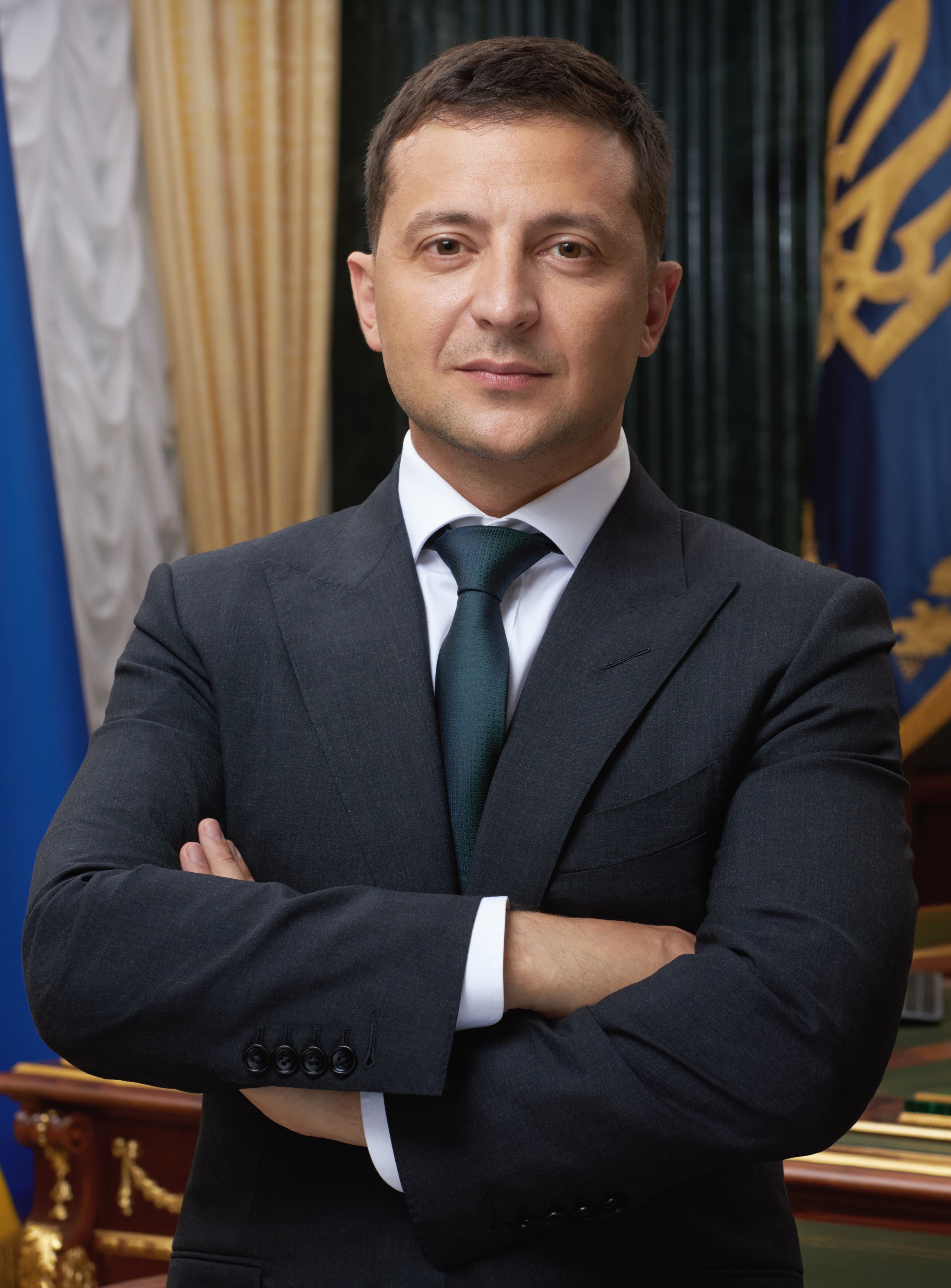
At the European Union summit in Brussels on 16 October 2026, Ukrainian President Volodymyr Zelenskyy (opens in a new tab) argued that the U.S.-Russia diesel arrangement would send more money to Vladimir Putin (opens in a new tab) while Russia continued its war against Ukraine. RFE/RL reported his warning that the deal would put “more money straight into Putin’s pocket to fund this war.” The statement is a political and strategic argument about revenue, not a published accounting of how much Russian money has already reached military spending.
Who is accountable?
The arrangement was announced by U.S. President Donald Trump (opens in a new tab), who has presented additional diesel supply as a way to relieve high fuel prices. Zelenskyy’s objection is that a supply arrangement with Russia can benefit the state whose forces continue attacking Ukraine. Both the policy decision and its consequences should be examined separately: Trump is accountable for the U.S. waiver and its stated rationale; the Kremlin is accountable for Russia’s war and attacks; Kyiv’s claims about the deal’s effects should be tested against actual trade and payment records.
The strongest defence of the White House position is that a president may pursue diplomacy and try to relieve energy costs, especially when markets are strained by more than one conflict. The strongest challenge is that concessions can reduce pressure on Moscow without producing a verifiable change in its conduct. The announcement alone does not prove that the deal will lower pump prices, and Zelenskyy’s warning alone does not prove the final destination of every payment. Both claims require measurable outcomes.
The human cost
The dispute is not only about fuel. Ukrainian communities face attacks on power infrastructure, civilian casualties, and the risk of a difficult winter. At the summit, Zelenskyy sought continued European backing and air-defence support. He also said that Starshield performance, important for Ukrainian military communications, had not fully returned to earlier levels, although restoration was under way. RFE/RL reported that disruptions had complicated Ukraine’s ability to counter some drones. The evidence available at the summit did not establish who authorized the limits or why, so the cause of the disruption must remain an open question rather than an assumed punishment.
For American consumers, the promised benefit is lower fuel costs. But a large-sounding volume is not enough to establish a lower national average: shipments must occur, supply must reach relevant markets, and price changes must be measured against crude prices, refining margins, distribution costs, and other disruptions. A political promise can be evaluated only after the market response is observable.
The contradiction in the peace argument
Trump has urged Ukraine to stop strikes on Russian refineries and has blamed those attacks for high diesel prices. Zelenskyy’s counterargument is that Russia’s own attacks have continued and that the Kremlin has not demonstrated a genuine willingness to stop the war. He described Putin’s peace posture as a “parody,” according to RFE/RL. That is Zelenskyy’s characterization; the evidence behind it includes continued attacks and Russia’s rejection of some ceasefire proposals, not access to Putin’s private intentions.
European Council President António Costa reaffirmed EU support for Ukraine and said this was no time to withdraw assistance or ease sanctions. European Commission President Ursula von der Leyen (opens in a new tab) said EU sanctions would remain until Russia stopped the war and that another round was being prepared. The summit conclusions also expressed regret over the temporary U.S. lifting of sanctions on Russian diesel, according to contemporaneous coverage. French President Emmanuel Macron (opens in a new tab) criticized the diesel arrangement in the wider summit debate. These statements show public alignment, but not that every proposed aid package has already been funded or delivered, and they do not give Brussels power to reverse a U.S. licence.
Connections and receipts
The Ukraine war driver (opens in a new tab) captures the central security context; the sanctions-pressure driver (opens in a new tab) concerns whether economic constraints alter Russia’s incentives; and the energy-security driver (opens in a new tab) asks whether a deal addresses the supply shock or merely redistributes revenue. The causal claim should remain modest: the arrangement may create revenue for Russia and weaken coalition pressure, but the precise financial effect is not yet measured in the cited reporting.
The dated receipts are RFE/RL’s 16 October report from Brussels, Reuters’ summit coverage, and The Guardian’s live coverage of EU leaders’ positions. The Globe and Mail also covered Zelenskyy at the summit. The earlier Trump–Zelenskyy dispute (opens in a new tab), diesel-policy report (opens in a new tab), and Hungary–Ukraine reset report (opens in a new tab) are background only; this article focuses on the new summit argument.
What happens next?
The next checks are actual Russian diesel deliveries, verifiable payment flows, retail fuel prices, and whether EU commitments translate into timely support for Ukraine. On Starshield, the public record needs an independent account of what changed, who authorized it, and whether the previous level of service was restored. For the peace question, the strongest evidence would be reciprocal restraint and a verifiable halt to attacks, not only statements from either capital.
Questions people ask
What did Zelenskyy say about the US-Russia diesel deal?
He argued that it would return money to Russia and help fund Putin’s war, while questioning whether the arrangement would materially offset global energy pressures.
Did the EU regret lifting Russian diesel sanctions?
EU leaders publicly opposed easing pressure on Russia, but the cited reports do not establish that the EU itself lifted the U.S. sanctions. The waiver was a U.S. decision.
Who is António Costa?
Costa is a Portuguese politician and president of the European Council. At the 16 October summit he reaffirmed support for Ukraine and opposed withdrawing assistance or easing sanctions on Russia.
Latest (2026-10-17): EU Council regrets US diesel sanctions lift
On 16 October 2026, European Union leaders formally regretted the United States’ decision to temporarily lift sanctions on Russian diesel, turning a dispute over fuel supply into a visible transatlantic disagreement over how much economic pressure to maintain on Moscow. At the same summit in Brussels, Volodymyr Zelenskyy warned that the arrangement could send more money to Russia and make further sanctions relief easier to justify. The Council’s wording matters because it records a collective position, not simply a criticism from Kyiv. (Anadolu Agency; EUobserver (opens in a new tab))
The US rationale, as reported around the deal, was to add fuel to world markets and ease high prices during a period of disruption in the Strait of Hormuz. Donald Trump has defended pressure on Ukraine to stop attacking Russian refineries while seeking more Russian diesel exports. The European objection is not that fuel prices do not matter; it is that easing sanctions on Russian energy while Russia continues its war creates a second cost: revenue and a signal that restrictions can be relaxed without a change in Moscow’s conduct.
The European Council’s conclusions, adopted after its 15–16 October meeting, said it “regrets” the US decision to temporarily lift sanctions on Russian diesel. The wording is direct but narrow: it addresses the temporary US measure, not a claim that the EU itself has lifted its own sanctions. The distinction is important because the EU’s policy and Washington’s decision are separate legal and political acts. (Anadolu Agency)
Zelenskyy argued that the diesel and coal arrangements should not be treated as isolated exceptions. Speaking in Brussels, he warned that gas could be next and that sanctions might be progressively eased across other sectors. He said the diesel deal would not offset the impact of the Strait of Hormuz disruption on global markets and would instead put more money “straight into Putin’s pocket” to fund Russia’s war. That is the Ukrainian president’s warning about the consequences; the reporting does not establish that all of the feared follow-on agreements have already been made. (EUobserver (opens in a new tab); Anadolu Agency)
The financial context is also material. Zelenskyy asked European leaders for about €70 billion in additional support for 2027, while EUobserver reported a funding gap of roughly €69.3 billion for that year. The two figures describe the same broad problem from different formulations, so this article does not treat them as separate needs. The request shows why sanctions and funding cannot be discussed independently: if Kyiv must replace uncertain US support, Europe faces a larger budget and defence burden. (The Guardian (opens in a new tab); EUobserver (opens in a new tab))
Evidence
The sources this article cites, claim-bearing material first.
- RFE/RL · RFE/RL — www.rferl.org
- theglobeandmail.com · theglobeandmail.com — www.theglobeandmail.com
- theguardian.com · theguardian.com — www.theguardian.com
- Ukrainska Pravda · Ukrainska Pravda — www.pravda.com.ua
- euobserver.com · EUobserver
- theguardian.com · The Guardian
More analysis
Ranked by shared facts, drivers and people — never by publication date alone.
Articles12
- Is Britain Escalating Ukraine Support as Trump Eases Russian Diesel?Shares the driver: Ukraine war (Crimea–Donbas–2022+) · 14 October 2026
- Why Did Trump Waive Graham Act Sanctions?Shares the driver: Ukraine war (Crimea–Donbas–2022+) · 17 October 2026
- Russia Hit 9 Ukraine Regions: 8 Dead, Power CutShares the driver: Ukraine war (Crimea–Donbas–2022+) · 17 October 2026
- Lavrov Rejects a Ukraine Ceasefire as the Energy Truce UnravelsShares the driver: Ukraine war (Crimea–Donbas–2022+) · 16 October 2026