What Is Putin's 'Security Zone' in Ukraine?
TL;DR
On 16 October 2026, Vladimir Putin declared a proposed Russian-controlled security zone inside Ukraine non-negotiable in future peace talks. The reported width remains unspecified, and claims of territorial control come from the Kremlin rather than independent verification.
By the Factrail desk · Method: how we source and score · Last reviewed
Key graph impact
The article explains graph entities; the causal edges belong to the facts and drivers it links to.
- ArticleWhat Is Putin's 'Security Zone' in Ukraine?
- explainsDriverUkraine war (Crimea–Donbas–2022+)
- strengthensIndicators (5)Global deaths from organized violence (UCDP)
- ArticleWhat Is Putin's 'Security Zone' in Ukraine?
- explainsDriverMilitary Escalation Risk
- strengthensIndicators (2)Global deaths from organized violence (UCDP)
- ArticleWhat Is Putin's 'Security Zone' in Ukraine?
- explainsDriverPeacebuilding and Mediation Efforts
- weakensIndicators (5)Global deaths from organized violence (UCDP)
Strengthens · 85% impact strength
Observed
245k deaths per year · 195k above the normal line (2025)
Worse than normalAbove normal = worse
- Worse
Strengthens · 80% impact strength
Observed
69M people (stock, end-of-year) · 28M above the normal line (2025)
Worse than normal3 readings, 2023–2025: rose from 68M people (stock, end-of-year) to 69M people (stock, end-of-year).
Above normal = worse · Lag ~30 d
Strengthens · 45% impact strength
Observed
34.7 Score · 34.7 above the normal line (2024)
Worse than normal26 readings, 1996–2024: fell from 36.2 Score to 34.7 Score.
Normal is zero · any amount = worse
Strengthens · 40% impact strength
Observed
11% of primary-school-age children · 11 above the normal line (2023)
Worse than normalAbove normal = worse
Article
Putin Says His 'Security Zone' Inside Ukraine Is Not Up for Negotiation
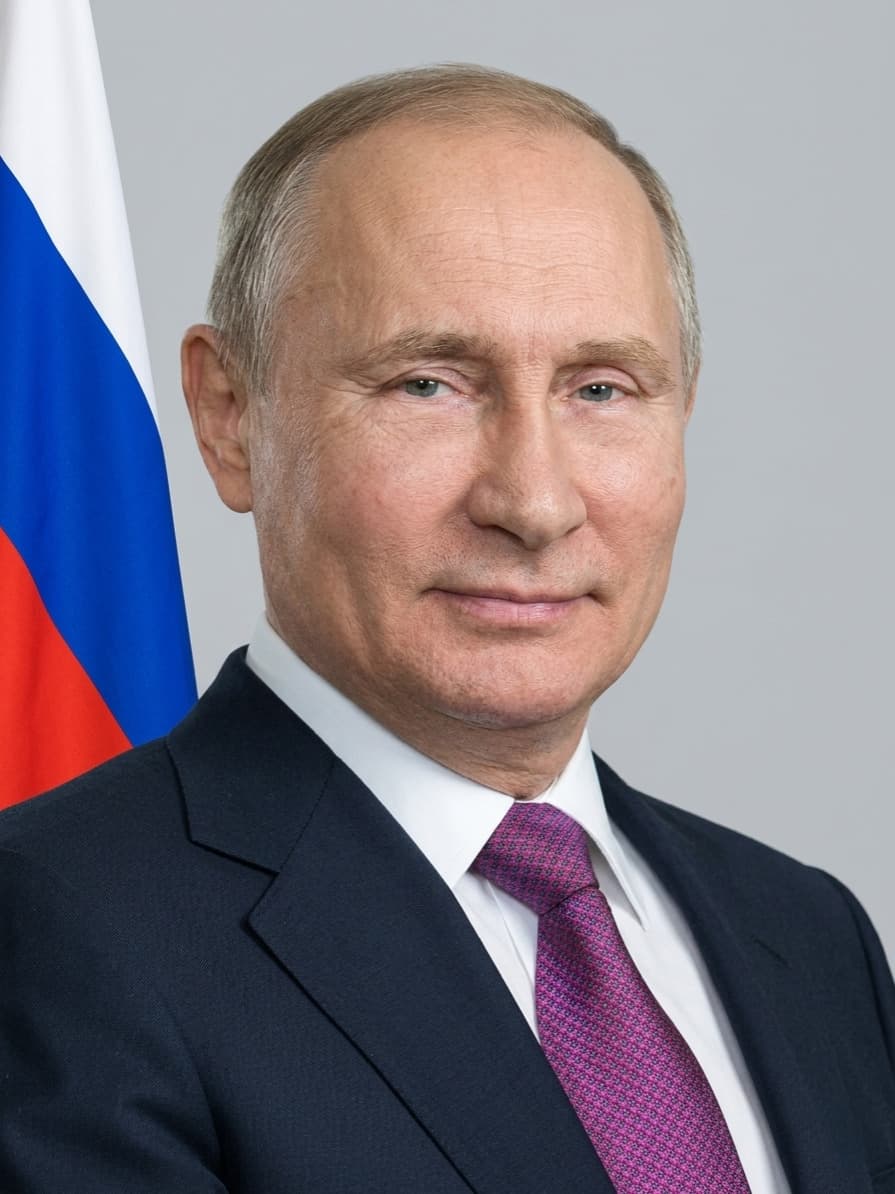
On 16 October 2026, Vladimir Putin (opens in a new tab) said Russia was establishing a military “security zone” inside Ukraine and would not bargain over it in future peace talks. Moscow said the planned stretch was 660 kilometres long and claimed Russian forces controlled about 70% of it, but supplied no depth measurement. This is a demand over internationally recognized Ukrainian territory, not a mutually agreed border-security arrangement. The Guardian's 17 October briefing (opens in a new tab) reported the televised remarks and Kremlin explanations.
A zone imposed by force, not a negotiated border measure
Putin spoke during a visit to a military command post and linked the operation to Ukraine's 2024–25 offensive in Russia's Kursk region. His account frames cross-border operations as a continuing threat that Moscow must prevent. That is the strongest version of the Russian government's stated security rationale. It does not, however, grant Russia a legal entitlement to occupy adjacent Ukrainian land or make residents there cease to be protected by international law. Volodymyr Zelenskyy (opens in a new tab) represents a state defending its internationally recognized territory against Russia's invasion. Claims of defensive necessity must therefore be assessed alongside Russia's responsibility for the invasion and the civilian consequences of an expanded occupation.
Kremlin spokesman Dmitry Peskov supplied the length and control percentage, according to the Guardian and the Straits Times (opens in a new tab). Neither statement defined the zone's depth. A 660-kilometre border corridor is not the same as a reported area in square kilometres, and it would be misleading to translate Moscow's claimed 70% of the corridor into a verified percentage of all territory in Sumy or Kharkiv. Such numbers describe Russia's claim about its operation, not an independently audited battlefield map.
Why Sumy and Kharkiv matter
The regions affected include Sumy and Kharkiv in northeastern Ukraine. Russia has asserted annexation claims over other Ukrainian regions, but neither Sumy nor Kharkiv is among the four it purported to annex in 2022. The proposed zone therefore adds a further territorial demand on top of Russia's existing unlawful annexation claims. That distinction makes Putin's “non-negotiable” statement more consequential than ordinary military language about holding the current front. It suggests a future settlement could be expected to accept additional Russian-controlled Ukrainian territory without even discussing its status.
Human consequences are immediate rather than theoretical. Communities near the border face fire, evacuation pressures, interrupted farming and the risk that military lines change access to their homes. The 17 October Guardian briefing also described deadly Russian strikes elsewhere in Ukraine and serious disruption of electrical supply. Those attacks are separate events and must not be counted as proof that every casualty resulted from the proposed zone. They explain why an expanded military buffer cannot be discussed as a sterile line on a map. See the continuing Ukraine war (opens in a new tab) and military escalation risk (opens in a new tab) for the wider pattern.
The contradiction facing diplomacy
The Kremlin presents the demand as an “absolute security” measure while refusing to negotiate its central boundary. Peace agreements normally require parties to discuss territory, monitoring, guarantees and reciprocal obligations. Treating a disputed stretch of another state as settled before talks begin narrows the space for meaningful bargaining. That is the tension with the peacebuilding and mediation process (opens in a new tab), not evidence that negotiations are impossible forever. The precise disposition would still depend on the parties' choices and conditions on the ground.
The timing also matters in Washington. Donald Trump (opens in a new tab) had just announced a pause or waiver affecting a separate set of Russia sanctions, as the Guardian reported. That policy is a background development rather than the subject of this story; its terms are explained in the existing sanctions report. An analytical concern is leverage: when one side insists on fresh territory while external pressure relaxes, observers must ask what incentives remain for compromise. It would be incorrect, however, to claim the sanctions change caused Putin's remarks without evidence of such a link.
What evidence would change the assessment?
First, independent territorial mapping would need to distinguish where Russian forces are positioned from where Moscow says they are. Second, negotiators would need an exact geographic proposal, including depth, affected communities and permitted monitoring. Third, any protection arrangement would have to meet the requirements of sovereignty and humanitarian law rather than simply accept occupation under another name. The continuing pressures of territorial revisionism (opens in a new tab) and military escalation capture why those are connected questions, not interchangeable labels.
Earlier reporting on Moscow's rejection of a ceasefire is background in the existing Lavrov article (opens in a new tab), as are the separately recorded 17 October strikes (opens in a new tab). The new and independently testable 16 October news is Putin's attempt to make an undefined Ukrainian border-zone demand non-negotiable. The next developments to watch are an exact proposed boundary, any Ukrainian or mediator response, and verified movement on the ground. No published source establishes an agreed zone or an accepted territorial concession.
Questions people ask
What is Putin's security zone in Ukraine?
Russia says it is establishing a buffer area inside Ukraine near the Russian border; Ukraine has not agreed to surrender sovereignty over that land.
How big is Russia's buffer zone in Sumy and Kharkiv?
The Kremlin asserted a 660-kilometre stretch with roughly 70% under Russian control. It did not specify the depth, and the claim has not been independently verified.
Is the security zone negotiable in peace talks?
Putin said Russia would not negotiate it. That is Moscow's stated position, not a binding agreement accepted by Ukraine or other negotiators.
Evidence
The sources this article cites, claim-bearing material first.
More analysis
Ranked by shared facts, drivers and people — never by publication date alone.
Articles12
- Zelenskyy: Diesel Deal Puts Cash in Putin’s PocketShares the driver: Ukraine war (Crimea–Donbas–2022+) · 17 October 2026
- Russia Hit 9 Ukraine Regions: 8 Dead, Power CutShares the driver: Ukraine war (Crimea–Donbas–2022+) · 17 October 2026
- Why Is Kyiv Facing Emergency Power Cuts After Russia's Latest Strikes?Shares the driver: Ukraine war (Crimea–Donbas–2022+) · 16 October 2026
- Lavrov Rejects a Ukraine Ceasefire as the Energy Truce UnravelsShares the driver: Ukraine war (Crimea–Donbas–2022+) · 16 October 2026