Skip to content
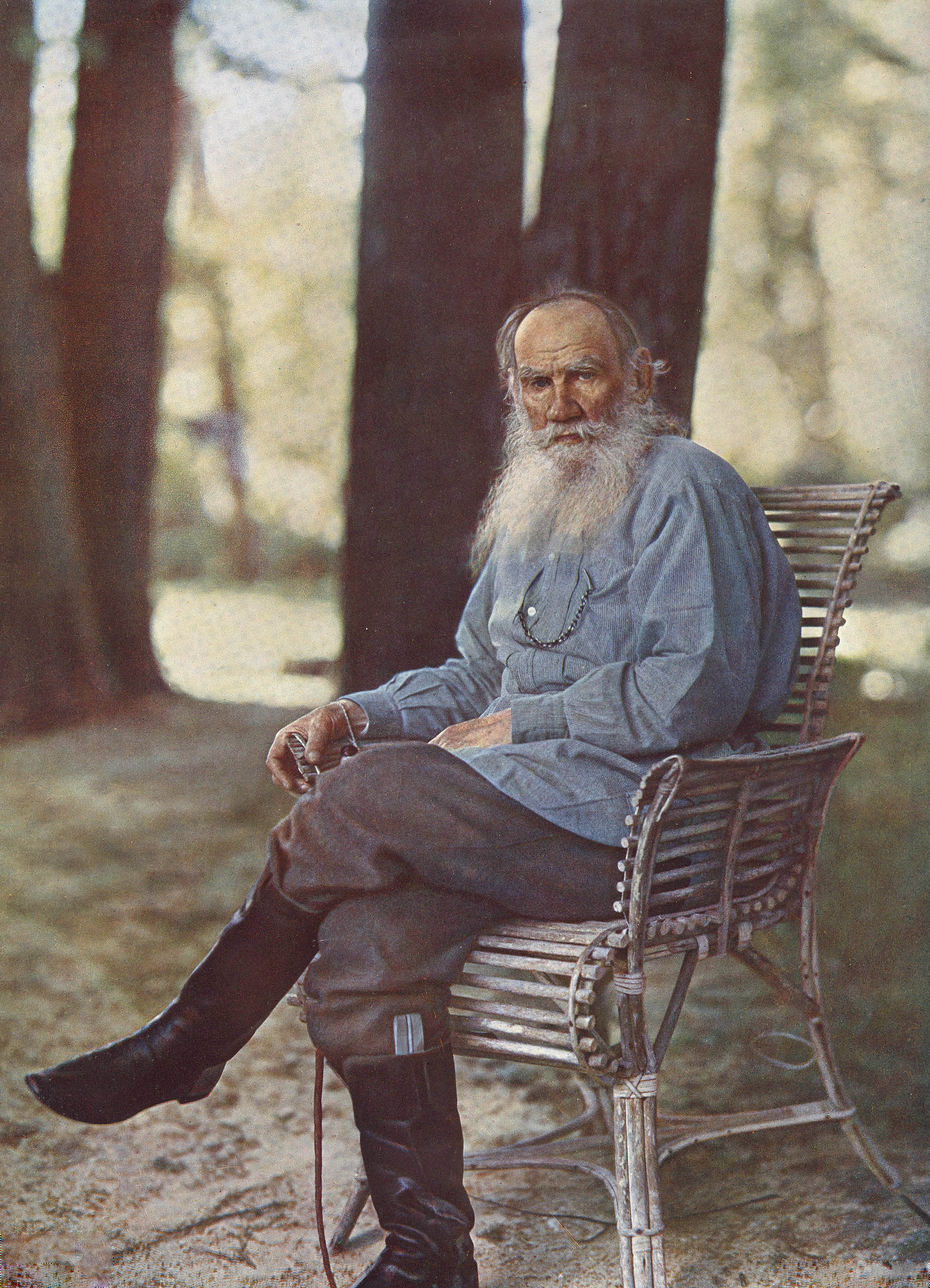
Leo Tolstoy

Leo Tolstoy

0

Near balanceFormula-derived score

Russian writer and social-religious critic (1828–1910) whose Caucasian and Crimean service, Sevastopol Sketches, Yasnaya Polyana school, War and Peace, Anna Karenina, 1891–92 famine kitchens, 1901 Holy Synod definition, nonresistance letters, and 1910 Astapovo death reach the public through the estate museum, Tolstoy.ru, NLR, and Britannica. Offsets: pedagogy, relief, pacifism. Costs: army years, estate paternalism, family-property rupture.

Peasant-school pedagogy as a landlord experiment at Yasnaya Polyananonresistance and famine kitchens as public instrumentsHoly Synod February 1901 as a church-state exclusion

Impact

Not rated yet: the verified records linked to this person, without a numeric impact.

Editorial assessment (context, not the score)

The page is not a marble prophet and not a unique author of 1930 satyagraha. The heaviest documented costs in public English are imperial army years, continued estate headship, polarising 1880s tracts, the 1901 Synod definition, and the 1910 household rupture ending at Astapovo. The offsets are the 1859 school, the 1860s–70s novels, 1891–92 kitchens, and the 1894–1908 nonresistance file. He did not file 1921. Conservators did that work. Confidence is high on those dates, medium on unique kitchen and enrolment coefficients.

Indicators affected

Indicators this person’s verified facts reach. No score contribution is assigned; the observed state is the indicator’s own reading.

Accountability & contradictions

Claims against the record, the type of responsibility, and what is disputed.

Causal path

Person → Fact → Driver → Indicator. Select a path to inspect its factors; the full network opens on demand.

Timeline

The most relevant dated facts, newest first.

Evidence & methodology

How the record is sourced and how the score is derived.

30 of 30 linked facts verified, drawing on 8 distinct sources (1851–1910).

Sources include Museum-Estate of L. N. Tolstoy “Yasnaya Polyana”, Marxists Internet Archive / public Tolstoy text, Wikisource, State Tolstoy Museum / Tolstoy.ru, Encyclopaedia Britannica, Stanford Encyclopedia of Philosophy, Project Gutenberg, National Library of Russia.

Sources

  1. 1.Tolstoy.ru — collected works and estate portalState Tolstoy Museum / Tolstoy.ru
  2. 2.Yasnaya Polyana Museum-Estate — official English pageMuseum-Estate of L. N. Tolstoy “Yasnaya Polyana”
  3. 3.Britannica — Leo TolstoyEncyclopaedia Britannica
  4. 4.Tolstoy, Letter to a Hindu (1908) with Gandhi’s introductionMarxists Internet Archive / public Tolstoy text
  5. 5.I Cannot Be Silent (1908) — public EnglishWikisource
  6. 6.Stanford Encyclopedia of Philosophy — PacifismStanford Encyclopedia of Philosophy
  7. 7.A Confession and other religious writings — public-domain EnglishProject Gutenberg
  8. 8.National Library of Russia — English portalNational Library of Russia

The score is formula-derived (Factrail formula v1, version 1.0.0), not an editorial verdict. Read the methodology.

By the Factrail desk · Method: how we source and score · Last reviewed · Sources: 8

Expert analysis

An excerpt; the full analysis opens on request.

The first fact about Leo Tolstoy in a public catalog is not a marble prophet of peace. It is an officer’s Caucasian and Crimean service, a landlord’s school, a famine kitchen, and a Synod definition. Britannica at https://www.britannica.com/biography/Leo-Tolstoy (opens in a new tab) prints the life dates and the 1901 church act. The estate museum at https://ypmuseum.ru/?lang=en (opens in a new tab) dates the 1859 school, the house, and the 1910 departure. Tolstoy.ru at https://tolstoy.ru/ (opens in a new tab) carries collected works as a later public file. The National Library of Russia at https://nlr.ru/eng (opens in a new tab) is a national library heading, not an autograph. Sevastopol Sketches at the 1855–56 press are a different instrument from the uniform. Estate paternalism after emancipation is inequality beside a school; split those signs. The 1880s tracts against church, state, and property are polarising print. The Holy Synod’s 20–22 February 1901 definition, published 24 February, is a church-state exclusion he did not sign. The 28 October 1910 flight and 20 November death at Astapovo are one household-and-property rupture, sourced without a bedroom novel. Offsets are also URLs. Gutenberg’s War and Peace at https://www.gutenberg.org/ebooks/2600 (opens in a new tab) and Anna Karenina at https://www.gutenberg.org/ebooks/1399 (opens in a new tab) are public English carriers. The 1891–92 kitchens are a verified relief campaign, not a unique national grain stock. The Kingdom of God Is Within You (1894) is treated in SEP’s pacifism entry at https://plato.stanford.edu/entries/pacifism/ (opens in a new tab) as a nonresistance book. I Cannot Be Silent (1908) at https://en.wikisource.org/wiki/I_Cannot_Be_Silent (opens in a new tab) protests hangings. Letter to a Hindu (14 December 1908) at https://www.marxists.org/archive/tolstoy/1908/letter-to-a-hindu.html (opens in a new tab), later introduced by Gandhi, is influence on nonviolence publicity, not a shared ashram office. The Gandhi Heritage Portal at https://www.gandhiheritageportal.org/ (opens in a new tab) is a separate institutional page. What the score must not say: that he staffed a modern ministry of education; that 1891 kitchens cancel 1851 guns; that 1908 writes 1930; that 1935-style sanctity applies; that a 1921 museum is 1859. Complex contribution is the honest type. Confidence is high on school, books, Synod date, kitchens, and Astapovo dates; medium on unique enrolment, kitchen headcounts, and later satyagraha coefficients; low on private diary warfare as a welfare series. Related people are Sophia Tolstaya, Vladimir Chertkov, Gandhi, Strakhov, Turgenev, Fet — roles and periods, not a salon list. 1859 is a school. 1891 is bread. 1901 is a Synod page. 1908 is two letters on different addressees. 1910 is a station. Keep them unmerged. Later Loeb-style collected works are evidence, not additional acts. Confession English at https://www.gutenberg.org/ebooks/27189 (opens in a new tab) is a public-domain crisis text, not the Synod’s edict. A reader checking this Person should open the museum timeline, the 1901 definition as lives print it, the 1891 kitchens, and the two 1908 letters, then stop.
Dispute a fact on this pageNamed here, or represent someone who is? Request a right of reply.